Madurai's hospitals carry a load that goes well beyond the city's population. As a regional medical hub for southern Tamil Nadu, facilities here serve patients from Virudhunagar, Dindigul, Theni, and beyond - many of them arriving with conditions that require immediate, uninterrupted care. The assumption built into all of that is that power will be available when it is needed.
That assumption has a gap in it.
Power cuts in Tamil Nadu are scheduled and routine
TANGEDCO conducts scheduled maintenance outages across Tamil Nadu on an ongoing basis. These are published in advance and typically run from a few hours to most of a working day. In Madurai, as in most non-metro districts in Tamil Nadu, outages affecting hospital-adjacent areas are a regular occurrence - both scheduled maintenance cuts and unscheduled faults from transformer failures, cable faults, and seasonal load spikes during summer.
For most establishments, a scheduled cut between 9 AM and 2 PM is manageable with advance notice. For a hospital, the calculation is different. You cannot defer a surgery because TANGEDCO has maintenance scheduled. You cannot pause a patient on a ventilator. You cannot ask an ICU to run at reduced capacity for five hours while the grid is down.
What the current backup setup actually covers - and what it misses
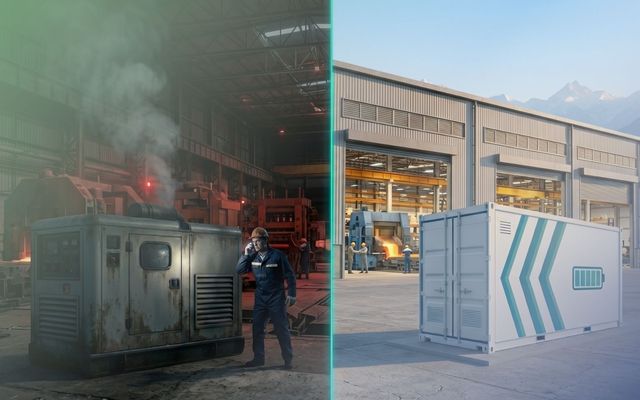
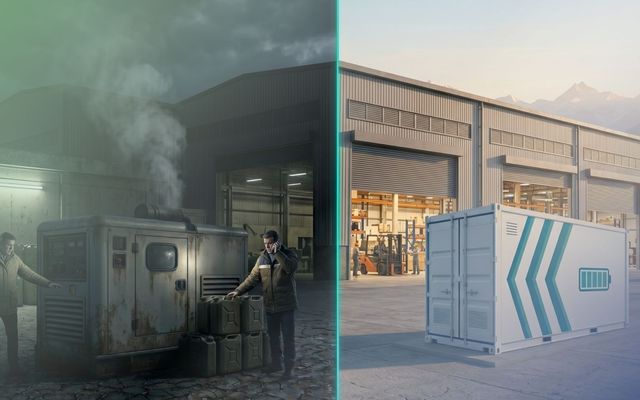
Most mid-size and larger hospitals in Madurai run diesel generators as their primary backup. Some have lead-acid UPS banks protecting specific critical loads. The standard assumption is that between the two, the hospital is covered.
The problem is the gap between them.
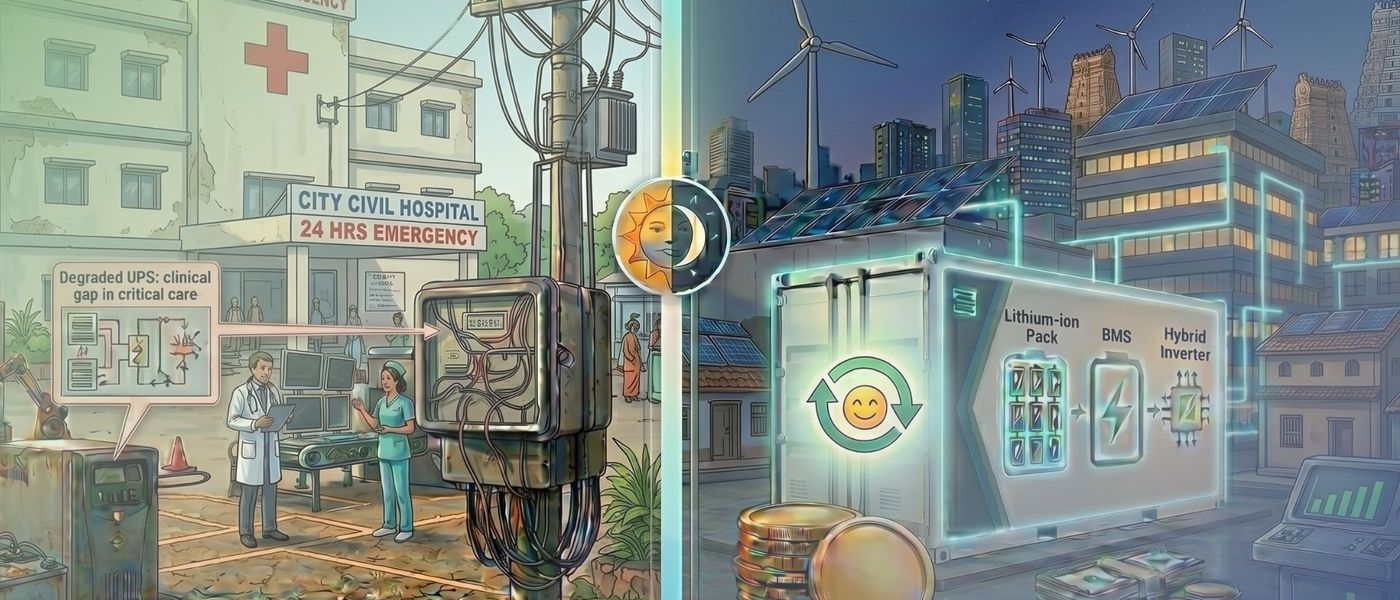
When grid power fails, a diesel generator requires 10 to 30 seconds to start, stabilise, and take on load. During that window, equipment on UPS batteries continues running - but only the equipment that was specifically wired to the UPS. Operating theatre lights, anaesthesia machines, ventilators, and infusion pumps may or may not be on the same protected circuit depending on how the hospital was wired.
Lead-acid UPS systems introduce their own issues. Their effective capacity degrades significantly over their lifespan. A UPS bank that was rated for 30 minutes of backup at installation may be delivering 10 to 12 minutes after a few years - and most hospitals do not test this regularly until there is an incident.
Beyond the clinical risk, the cost side of this setup is also harder to justify year on year:
- Diesel costs ₹22–25 per unit all-in, including fuel, maintenance, and consumables
- Lead-acid batteries require replacement every 3 to 5 years and involve significant disposal logistics
- Generator maintenance in high-use environments is frequent and expensive
- Both systems add to the facility's carbon footprint and face increasing CPCB compliance scrutiny
How BESS changes the backup architecture
A lithium-ion BESS is always on and always connected. There is no startup sequence. When grid power drops, the BESS takes over in under 20 milliseconds - fast enough that most equipment does not register a supply interruption at all.
For a Madurai hospital, this changes the backup model in a few meaningful ways:
For critical care: ICU ventilators, monitors, and infusion pumps stay live with no gap. The transfer is invisible to equipment and to patients.
For operating theatres: Surgical lighting and anaesthesia systems do not experience the momentary dip that a generator transfer causes. Ongoing procedures are not interrupted.
For the rest of the facility: The BESS can be sized to cover all essential loads - not just a protected ring - for the duration of an outage, with the generator serving as extended backup once it is running.
For cost: The BESS charges from the grid during off-peak hours at ₹7.13 per unit and replaces diesel runtime that costs ₹22–25 per unit. For a hospital running generators several hours a day, the operating saving is significant.
A note on sizing and fit
Not every hospital needs the same BESS configuration. A 50-bed nursing home has different critical load requirements than a 300-bed multispeciality facility. The right approach is to start with a load audit - identifying which loads are truly critical, what the current backup gap is, and what the daily DG runtime looks like. From there, a BESS can be sized to cover the gap precisely, without over-investing.
For hospitals already running rooftop solar, BESS adds another layer of value - the solar generation that currently stops when the grid goes down can continue to power the facility through the battery, extending the backup window without additional diesel.
Questions worth asking now
How long does your generator take to come online after a grid failure, and which loads are unprotected during that window?
- What is your actual lead-acid UPS backup duration today, tested under real load conditions?
- How many hours per month is your generator running, and what is the all-in fuel and maintenance cost?
- Are there areas of your facility - OT, ICU, NICU, recovery - where even a 15-second gap in supply carries clinical risk?
The answers to these questions will tell you more about your actual exposure than any specification sheet will.
Ensure continuous power supply with a BESS! Reach out to TurnoVolt to learn more.