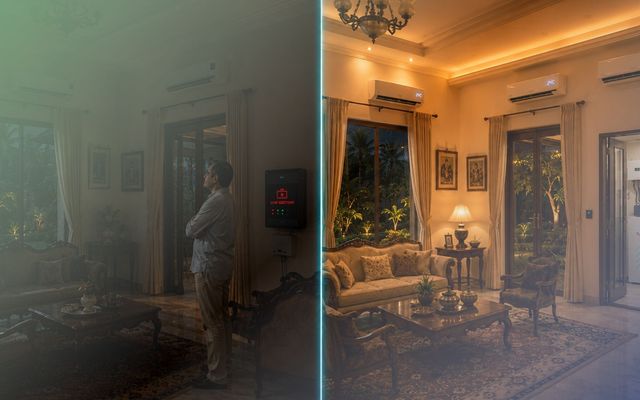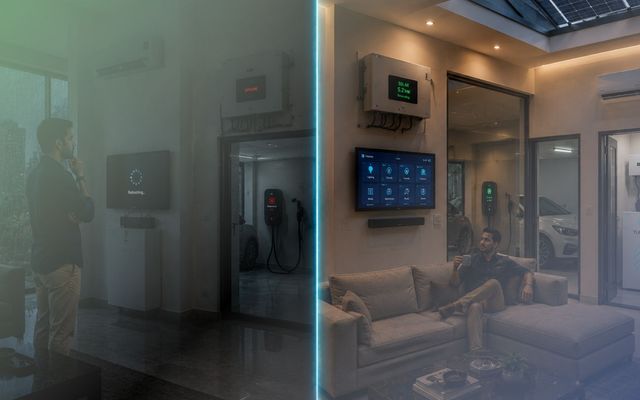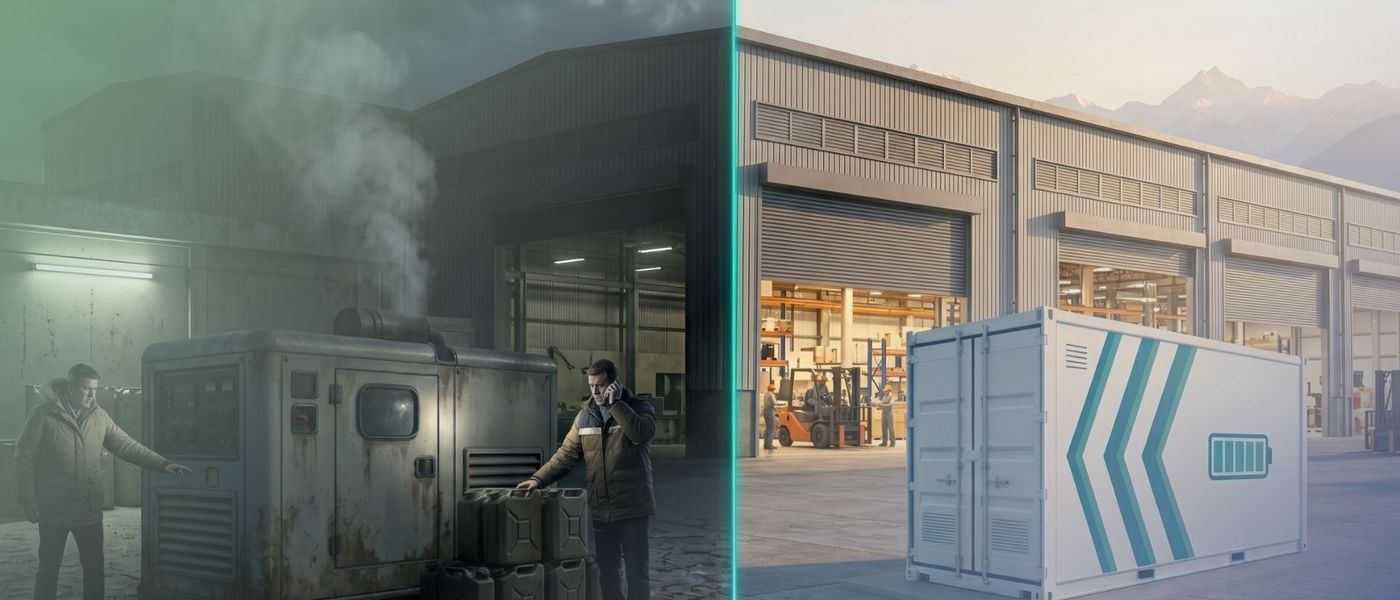
Bhiwandi runs on logistics. The warehouses, textile units, and manufacturing facilities spread across this belt handle a significant share of goods moving in and out of the Mumbai Metropolitan Region. Operations here are continuous, margins are competitive, and downtime is expensive. Power reliability is not optional - it is a baseline requirement.
And yet, for most factory and warehouse operators in Bhiwandi, a substantial portion of their electricity bill every month is diesel.
Why diesel costs are so high in Bhiwandi
Bhiwandi sits in an area where grid supply, while improving, still sees enough interruptions to make diesel generators a standard fixture in most industrial facilities. Scheduled maintenance by Mahavitaran (MSEDCL), unannounced faults, and voltage fluctuations during peak grid load periods all contribute to generator runtime that adds up quietly over a month.
The numbers are straightforward. Diesel generators cost ₹22–25 per unit all-in - covering fuel, consumables, and routine maintenance. Compare this to the grid rate for HT industrial consumers in Maharashtra, currently at ₹10.71 per unit under the MERC tariff order effective April 2026 (MERC tariff orders), and every hour the generator runs instead of the grid costs roughly double.
For a facility running a 200 kW load on DG for even four hours a day, that is:
- DG cost: 200 kW × 4 hrs × ₹23/unit = ₹18,400/day
- Grid equivalent: 200 kW × 4 hrs × ₹10.71/unit = ₹8,568/day
- Daily overpayment: ~₹9,800
- Monthly overpayment: ~₹2.9 lakh
That is before accounting for maintenance cycles, oil changes, coolant, and the periodic overhaul that high-runtime generators in industrial environments require every few thousand hours.
The hidden costs that don't show up in the fuel bill
Diesel costs are visible - they appear on purchase invoices and can be tracked month to month. But there are several other costs that accumulate alongside them that are harder to quantify:
Maintenance and downtime. A generator running several hours daily in a humid, dusty industrial environment like Bhiwandi ages faster than the service manual assumes. Filter replacements, injector cleaning, alternator servicing, and the occasional emergency repair add up. An unplanned generator failure during a grid outage can halt operations entirely - a cost that is felt immediately but rarely attributed to the generator in the post-mortem.
Compliance pressure. CPCB emission norms for diesel generators have tightened progressively. Newer CPCB IV+ norms require more sophisticated emission controls, and older generator sets that do not comply face increasing scrutiny. For industrial facilities in peri-urban zones around Bhiwandi, this is a real and growing compliance consideration.
Fuel storage and logistics. Maintaining a fuel inventory, managing refills, and ensuring the storage setup meets safety norms adds operational overhead that rarely gets costed into the per-unit calculation.
What BESS does differently
A Battery Energy Storage System addresses the diesel cost problem at its root - by eliminating the need for the generator during most outages altogether.
The mechanism is simple. The BESS charges from the grid during normal supply hours, building up a reserve. When the grid drops, the BESS takes over instantly - no startup delay, no fuel consumption, no emissions. The generator, if kept as a backup for extended outages, runs far fewer hours per month, dramatically reducing both fuel spend and maintenance wear.
For a Bhiwandi facility, the cost comparison looks like this:
- Grid cost: ₹10.71/unit (HT industrial, Maharashtra, FY 2026-27)
- BESS delivered cost: grid source rate + ₹2.50–3.00/unit system cost = approximately ₹13.20–13.70/unit
- DG cost: ₹22–25/unit
Every unit of electricity served by BESS instead of the generator saves ₹8–12 per unit. For facilities with significant daily DG runtime, this saving compounds quickly.
The ToD angle adds another layer
Maharashtra's ToD structure offers industrial consumers a 15% rebate during solar hours (9 AM–5 PM) from April to September, and a 25% rebate from October to March. A BESS paired with this structure allows a Bhiwandi factory to charge at discounted daytime rates and discharge during periods when the grid is either unavailable or more expensive - stacking savings across both the DG replacement benefit and the tariff optimisation benefit.
Where to start
For any Bhiwandi factory owner looking to understand whether BESS makes sense for their facility, three numbers are worth pulling together first:
- Monthly diesel expenditure - fuel invoices across the last 6–12 months, separated from other maintenance costs
- Daily DG runtime - average hours per day the generator runs, and whether this is during outages or peak-load supplementation
- Current grid tariff category - HT or LT, and what the applicable ToD structure is under the current MERC order
With these three data points, the savings from replacing DG hours with BESS can be calculated precisely for your specific load profile.
Save on diesel costs with a BESS! Reach out to TurnoVolt to learn more.