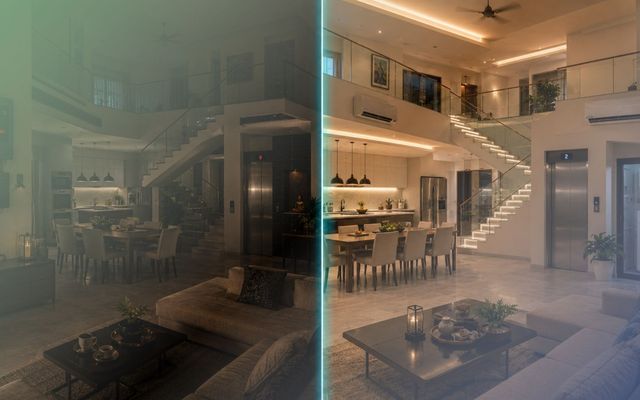
Kalyani Nagar has a particular energy. The homes here are large, well designed, and occupied by people who have thought carefully about how they want to live. The smart home system was not an afterthought. The EV in the garage was an early decision. The rooftop solar was evaluated, specified, and installed by someone who understood the numbers. These are not homes that inherited their standard. They built it, deliberately, with an eye on what was coming next.
And when MSEDCL fails on a monsoon evening, the inverter kicks in. The fans keep running. The lights stay on. The ACs stop. The EV charging session resets. The smart home reboots. The home that was built around the idea of doing everything right stops doing several things right simultaneously.
The inverter was not built for what is next. It was built for what was.
A home this connected deserves better than a reboot.
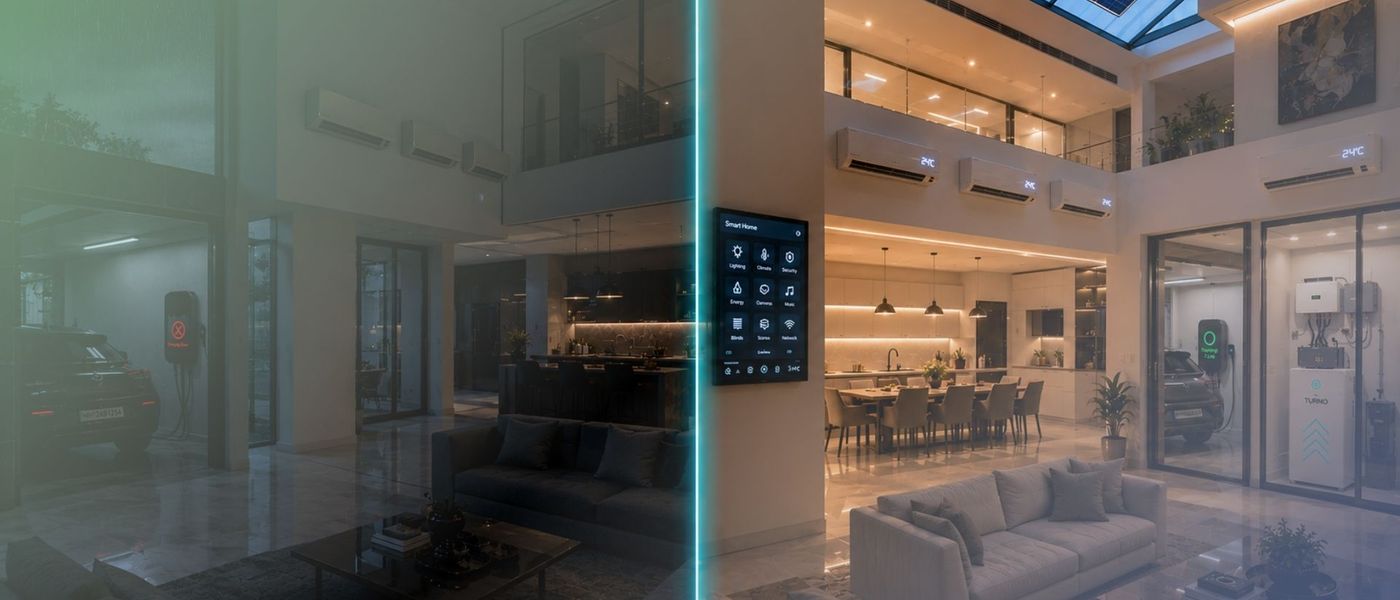
Kalyani Nagar homes run on integration. The smart home system manages lighting, climate, security, and entertainment from a single interface. The EV charges overnight on a schedule the homeowner set once and has not thought about since. The rooftop solar feeds into the home's consumption during the day, reducing the grid bill quietly and continuously. Everything works together because it was specified to work together.
A conventional inverter breaks that integration the moment the grid fails. The smart home reboots and loses its programmed state. The EV charging session drops and needs to be restarted manually. The climate control loses its settings. The security system experiences a gap. The home that was designed to run seamlessly runs anything but seamlessly for the next several minutes while every connected system finds its feet again.
That is not a power cut. That is a systems failure. And it happens every time MSEDCL fails, because the inverter was designed for a home that did not have these systems. It was not designed for this one.
MSEDCL in Kalyani Nagar during monsoon.
Pune's monsoon is genuinely challenging for the grid. MSEDCL's distribution infrastructure in Kalyani Nagar and the surrounding areas manages a load that has grown significantly as the neighbourhood has developed. Monsoon storms bring down feeder lines. Transformer faults add unscheduled outages to the planned maintenance cuts that are a routine feature of the season.
For a home that runs on integration and connectivity, every outage is a reset event. Every reset event is a reminder that the most sophisticated system in the home has a dependency on infrastructure that was not built to the same standard.
Turno removes that dependency.
Turno runs the whole home. ACs, lift, and all.
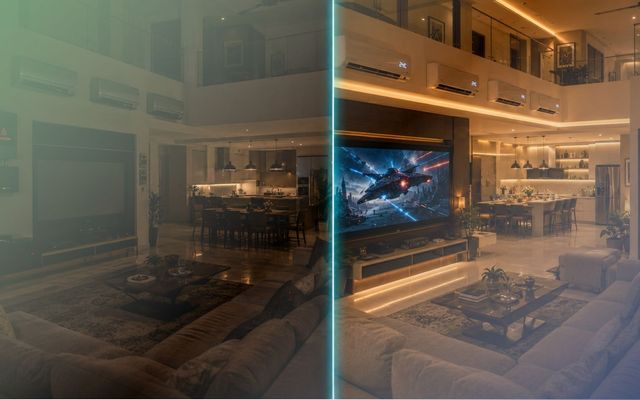
When MSEDCL fails, Turno switches over in under 20 milliseconds. The ACs keep running. The smart home stays in its programmed state. The EV continues charging on its overnight schedule. The security system stays live. The climate control holds its settings. The home theatre keeps playing.
Nothing reboots. Nothing resets. No system loses its state. The integration that the home was built around stays intact because from every connected device's perspective, nothing changed.
This is not a better inverter. It is a permanent power source that was built for homes like this one. The grid becomes a charging input alongside the rooftop solar. Turno manages both, continuously and without attention, deploying stored energy when the grid is unavailable and optimising consumption when it is.
The home runs exactly as it was designed to run. All the time.
The solar dimension is particularly strong here.
Kalyani Nagar homeowners who have already invested in rooftop solar are leaving value on the table every evening. The solar plant generates during the day. The home's peak load arrives in the evening. Without storage, those two windows never meet.
Turno stores the daytime solar generation and deploys it through the evening, when the home's load peaks and the grid bill is at its highest. The solar investment, which was already delivering daytime savings, now delivers evening savings as well. The return on the solar installation improves significantly without any modification to the panels themselves.
A quick look at the numbers.
A Kalyani Nagar home currently spending ₹3 to ₹5 lakh annually on diesel and generator maintenance eliminates most of that cost in the first year. The addition of evening solar utilisation delivers a further saving of ₹1.5 to ₹2.5 lakh annually depending on the home's solar capacity and evening consumption profile. Combined annual savings can reach ₹4 to ₹6 lakh for a large independent home.
Battery storage systems installed alongside solar qualify under central government clean energy incentive frameworks, with applicable GST and depreciation benefits depending on system configuration.
Built for what is next. Running on what is here.
Kalyani Nagar homes were built around a clear idea of what modern living should look like. The power infrastructure running them should match that idea.
Turno runs the whole home. ACs, lift, and all. No reboot. No reset. No compromise. You stop thinking about power entirely.
It just runs.
Upgrade your home's power infrastructure! Reach out to TurnoVolt to learn more.
-640x400.jpg)