Dwarka is one of Delhi's most deliberately planned residential townships. The homes here were not built in a hurry. The independent houses and larger builder floors across Sectors 4, 6, 10, and 23 reflect years of considered investment. The interiors have been done carefully. The kitchens are fully equipped. The ACs run in every room. The cars in the driveway are right. These are homes built by people who made a plan and executed it well.
And when BSES fails on a summer afternoon, the inverter kicks in. The fans keep running. The lights stay on. The ACs stop. The home that was planned and built to a clear standard stops meeting it.
The inverter was not part of the plan. It was the compromise that came with it.
Dwarka's grid challenge is structural.
Dwarka is one of Delhi's most densely populated residential areas. The grid serving it manages a load that grows every year as the township fills out and consumption per household rises. Summer months place the distribution infrastructure under maximum stress. Planned maintenance cuts are a routine feature. Transformer overloads and feeder faults add to the count during peak demand periods.
For a large independent home in Dwarka drawing significant load across multiple floors, a summer power cut is not a minor event. The ACs stop. The household adjusts. The home that was built to run at full capacity runs at a fraction of it until BSES returns.
The inverter has been the answer to this for years. It is the wrong answer for a home at this level.
The inverter upgrade cycle that never fully delivered.
Most Dwarka homeowners have been through the inverter upgrade cycle at least once. The original unit was replaced. The battery bank was expanded. More circuits were added. And still, when the grid fails in June, the ACs go off.
That outcome is not going to change with another upgrade. The inverter was designed to shed heavy loads during a power cut. Bigger batteries extend the runtime of the reduced load. They do not change what the reduced load is.
The AC goes off because the inverter was designed to turn it off. Not because the battery is too small. Because the system was built around the assumption that during a power cut, the household would manage without the AC.
A Dwarka household that has invested in a home of this standard should not be managing without the AC in a Delhi summer. That assumption should never have applied here.
Turno was built without that assumption.
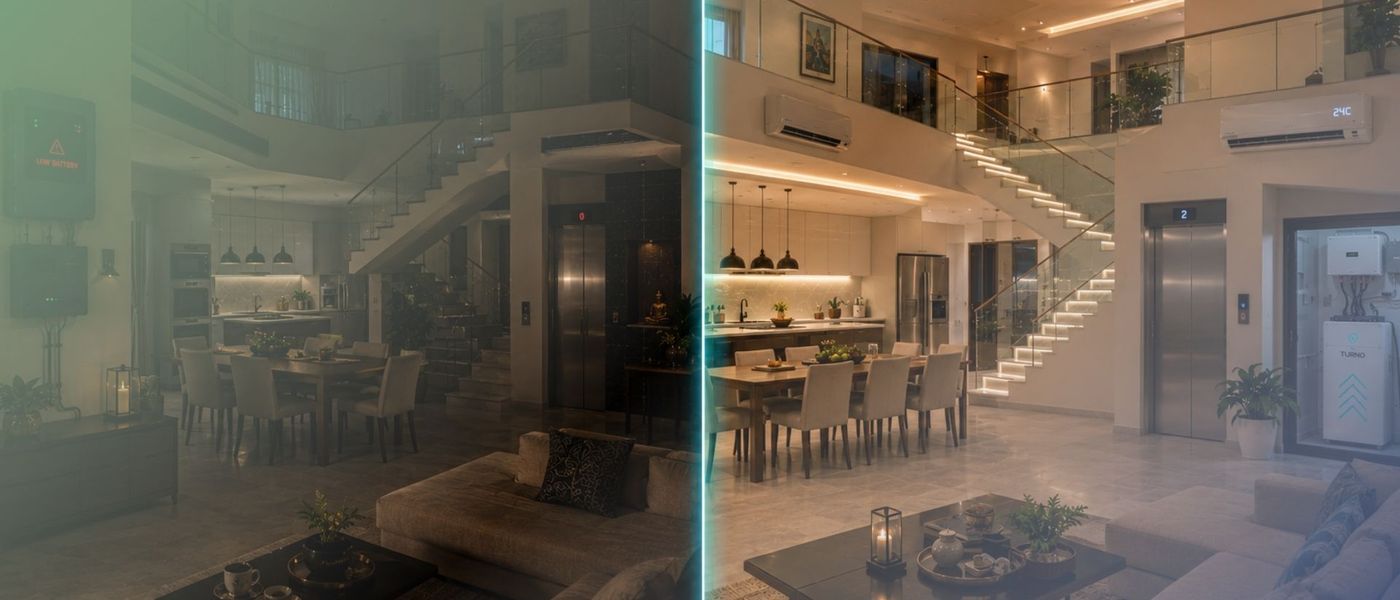
Turno runs the whole home. ACs, lift, and all.
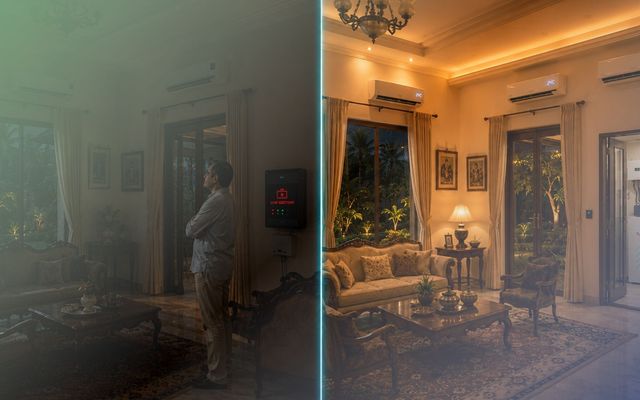
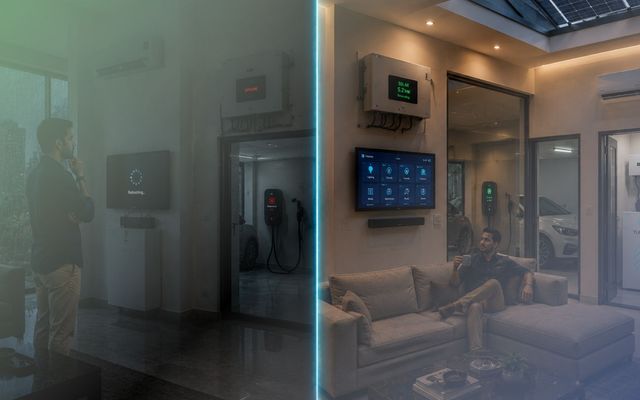
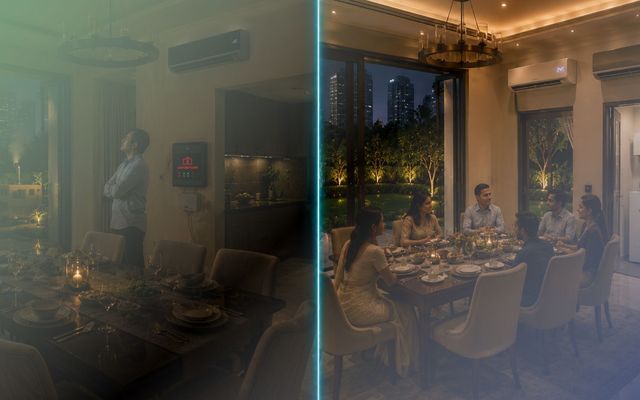
When BSES fails, Turno switches over in under 20 milliseconds. Every AC in the house keeps running. The lift keeps moving. The kitchen appliances stay live. The security system stays on. The home theatre keeps playing. The EV keeps charging.
Nothing stops. Nothing reboots. The household does not adjust to anything because there is nothing to adjust to. From every appliance's perspective, the grid did not fail. Because Turno was already running.
This is not a larger inverter. It is not an inverter at all. It is a permanent power source that runs the full load of the home, continuously, whether the grid is available or not.
The grid becomes a charging input. When it is there, Turno uses it. When it is not, Turno does not need it. The home runs on Turno. At full capacity. Exactly as it was built to run.
The financial case is particularly strong in Dwarka.
Dwarka homeowners are practically minded. The financial case for Turno is straightforward and worth stating directly.
A Dwarka home currently spending ₹3 to ₹5 lakh annually on diesel and generator maintenance eliminates most of that cost in the first year. Delhi's strong summer irradiance makes rooftop solar a productive pairing with Turno. Stored daytime solar covers evening and overnight consumption, reducing the grid bill further. Combined annual savings can reach ₹4 to ₹6 lakh for a large independent home.
Battery storage systems installed alongside solar qualify under central government clean energy incentive frameworks, with applicable GST and depreciation benefits depending on system configuration.
For a homeowner who built this home on a clear plan and clear numbers, the Turno case fits the same framework. The saving is real. The improvement is permanent. The compromise is over.
The plan was always for it to run properly.
This home was built with a plan. The plan was for it to run at full capacity, all the time, exactly as designed.
Turno delivers that plan. ACs, lift, and all. Not just fans and lights. You stop thinking about power entirely.
It just runs.
Stop worrying about your home’s power infrastructure. The TurnoVolt team is waiting.