-1400x600.jpg)
Rohini is one of Delhi's most substantial residential areas. The independent homes across Sectors 9, 13, 15, and 24 are not modest. They are large, multi-floor properties built by families who invested seriously in the space they wanted to live in. The kitchens are fully equipped. The ACs run across multiple floors. The home theatre works. The cars in the driveway get charged overnight. The security system runs continuously. These are homes that were built to run at full capacity because that is what the investment was for.
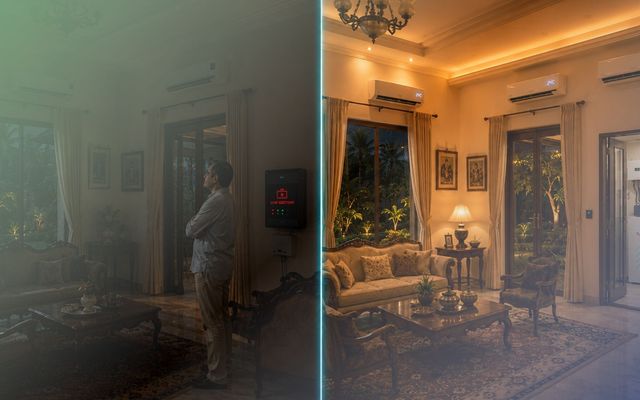
And when BSES fails on a June afternoon, the inverter kicks in. The fans keep running. The lights stay on. The ACs stop across every floor. The lift stops. The kitchen goes quiet. The home that was built large and built well stops running the way it was built to run.
The inverter kept the fans going. The home needed more than that.
Rohini's grid under summer stress.
Rohini is one of North West Delhi's most densely populated residential zones. The grid serving it manages a load that grows every year. Delhi summers push every household in the area to maximum consumption simultaneously. Planned maintenance cuts from BSES are a routine feature of Rohini summers. Transformer overloads and feeder faults add further outages during peak demand months.
For a large independent home in Rohini drawing load across multiple floors and multiple ACs, a summer power cut lands hard. The household adjusts floor by floor. The ACs go off. The family congregates in the one room that feels most bearable. The inverter runs the fans. The home waits for BSES to return.
That is not what this home was built for.
The inverter was never going to run this home.
Rohini's independent homes run large loads. Multiple ACs across three or four floors. A fully equipped kitchen that runs hard during meal preparation. A home theatre. An EV charging overnight. A security system that never goes off. A lift serving elderly family members across floors.
A conventional inverter was not designed for this load profile. It was designed to shed heavy loads during a power cut and hold fans and lights on battery until the grid returned. The battery bank has been upgraded in most Rohini homes at least once. The inverter unit has been replaced. The outcome has not changed.
The AC goes off because the inverter was designed to turn it off. That is not a specification problem. It is a design philosophy that was never suited to a home of this size and this load.
Turno operates on a different design philosophy entirely. It does not shed loads. It runs them.
Turno runs the whole home. ACs, lift, and all.
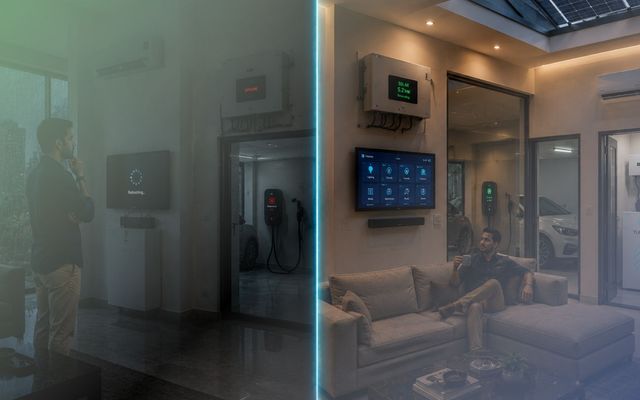
When BSES fails, Turno switches over in under 20 milliseconds. Every AC across every floor keeps running. The lift keeps moving. The kitchen appliances stay live. The home theatre keeps playing. The security system stays on. The EV keeps charging.
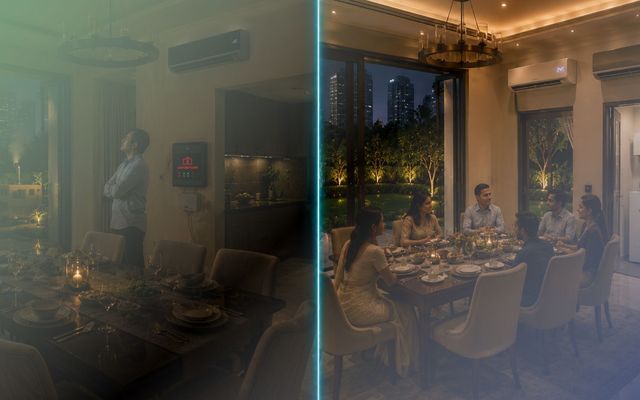
Nobody in the house moves to a different room. Nobody adjusts to anything. The home runs at full capacity because Turno was already running before the grid failed, and it continues running after.
This is not a better inverter. It is a permanent power source. The grid is a charging input. When it is available, Turno uses it. When it is not, Turno does not need it. The home runs on Turno. Across every floor. At full capacity. Exactly as it was built to run.
Not fans and lights. Everything.
A quick look at the numbers
A Rohini home currently spending ₹3 to ₹5 lakh annually on diesel and generator maintenance eliminates most of that cost in the first year. Delhi's strong summer irradiance makes rooftop solar a productive pairing with Turno. Stored daytime solar covers evening and overnight consumption, reducing the grid bill further. Combined annual savings can reach ₹4 to ₹6 lakh for a large independent home.
Battery storage systems installed alongside solar qualify under central government clean energy incentive frameworks, with applicable GST and depreciation benefits depending on system configuration.
For a Rohini homeowner who built large and invested seriously, the Turno case is simple. The saving is real. The improvement is immediate. The compromise the inverter always represented is over.
Large home. Full power. All the time.
This home was built large because that was the intention. The power infrastructure running it should match that intention.
Turno runs the whole home. ACs, lift, and all. Not just fans and lights. You stop thinking about power entirely.
It just runs.
Upgrade your home’s power infrastructure. The TurnoVolt team is waiting.