Banjara Hills has always known what it is. The independent homes and villas across Roads 10, 12, and 36 are not defined by size alone, though they are large. They are defined by the precision with which they have been built and maintained. The families here are financially sophisticated, operationally sharp, and completely clear about the standard their homes should meet. The interiors reflect it. The cars in the driveway reflect it. The security setup reflects it.
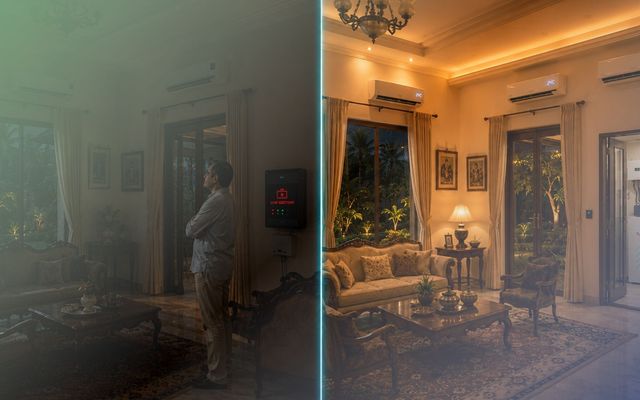
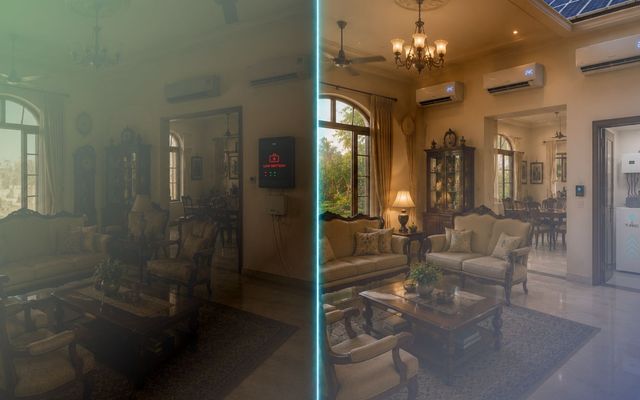
And when TSSPDCL fails on a May evening, the inverter kicks in. The fans keep running. The lights stay on. The ACs stop. The lift stops. The dinner being prepared in the kitchen continues on reduced power. The home that was built and maintained to a precise standard stops meeting it.
The inverter managed the situation. Banjara Hills has never been interested in managing situations.
The ToD tariff changed the equation.
Until recently, a Banjara Hills homeowner dealing with grid outages through a diesel generator and an inverter was making an expensive but straightforward choice. The generator ran, the inverter covered smaller outages, and the cost was absorbed.
That calculus has shifted significantly.
The Telangana Electricity Regulatory Commission introduced Time of Day tariffs for HT consumers effective May 2025. Under the current TGERC structure, electricity consumed between 6 PM and 10 PM attracts a surcharge of ₹1.00 per unit above the base energy rate. Electricity consumed between 10 PM and 6 AM carries a rebate of ₹1.50 per unit below the base rate.
For a large independent home in Banjara Hills, the 6 PM to 10 PM window is the most active four hours of the household day. Dinner is being prepared. The home theatre is running. The HVAC is at full capacity as the evening temperature remains high. Guests may be present. Every unit consumed during this window now costs more than it did before, every single day, whether the grid fails or not.
For a home consuming 60 units during the evening peak window each day, the monthly surcharge adds ₹1,800 directly to the electricity bill. For larger homes with higher evening loads, that number scales considerably. It is a cost that arrives every month on every bill without requiring a grid failure to trigger it.
The inverter was never built for either problem.
A conventional inverter addresses power cuts partially. It keeps fans and lights running while the ACs stop. It does not address the ToD surcharge at all. It was designed before time differentiated tariffs existed and has no mechanism to optimise against them.
The result is a Banjara Hills home that pays peak hour surcharges every evening and manages on fans and lights during every power cut. Two separate problems, both unresolved, both adding to the cost and the disruption of running a home at this level.
Turno BESS addresses both simultaneously.
Turno BESS runs the whole home. ACs, lift, and all.
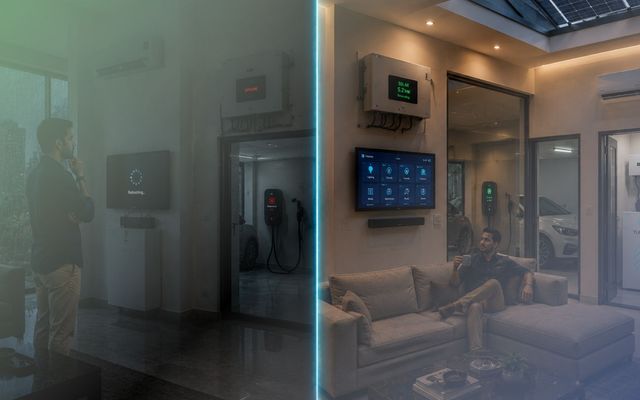
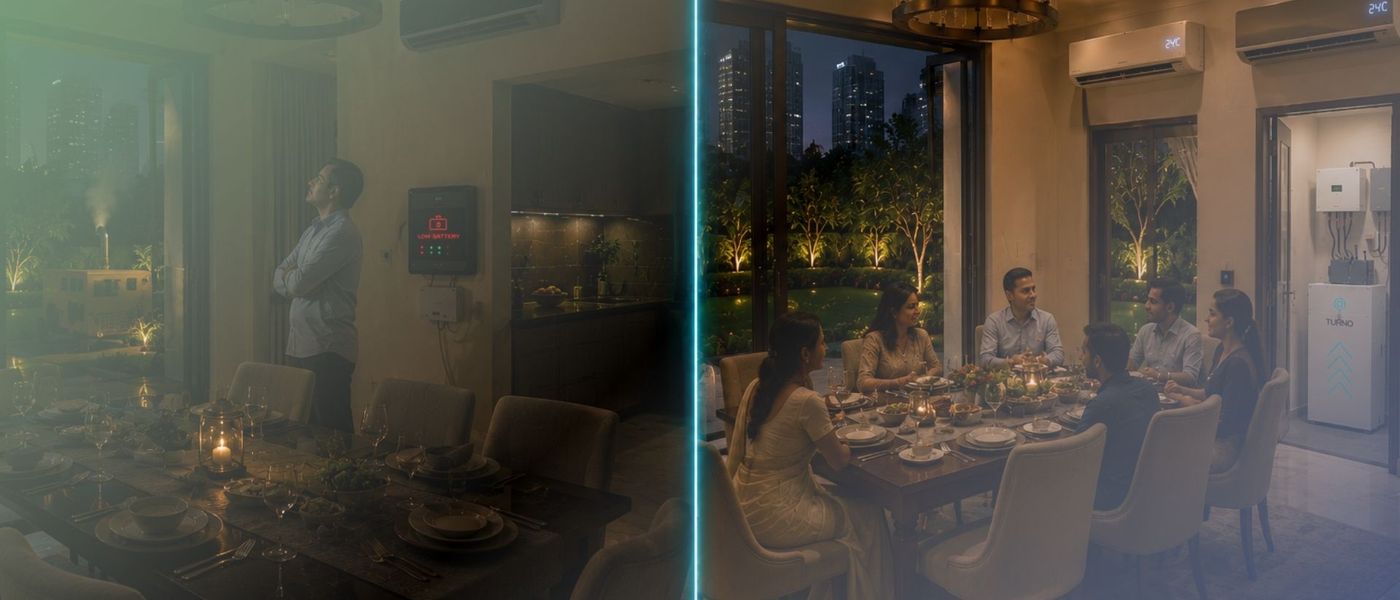
When TSSPDCL fails, Turno BESS switches over in under 20 milliseconds. Every AC in the house keeps running. The lift keeps moving. The dinner service in the kitchen continues without interruption. The smart home stays in its programmed state. The security system stays live. The home theatre keeps playing.
Nothing stops. Nothing reboots. Nobody in the house adjusts to anything. The home continues to run at the standard it was built to meet because from every appliance's perspective, nothing changed.
And during the hours the grid is running, Turno BESS is already optimising against the ToD structure. It charges during off peak hours at the rebated rate and discharges during the 6 PM to 10 PM peak window, replacing expensive evening grid electricity with stored power. The household routine does not change. The energy cost does.
Two problems. One installation. Both resolved.
The solar pairing amplifies the benefit.
Many Banjara Hills homes have invested in rooftop solar. Hyderabad's strong solar irradiance makes those installations productive during the day. But the solar plant goes quiet at 5 PM, precisely when the peak tariff window begins and the home's load peaks.
Turno BESS stores the daytime solar generation and deploys it through the evening peak window, replacing grid electricity at the surcharge rate with stored solar at generation cost. The solar investment earns its full return. The ToD surcharge is avoided on every unit the battery can cover. The grid bill drops further.
A quick look at the numbers.
A premium Banjara Hills home currently spending ₹3 to ₹5 lakh annually on diesel and generator maintenance eliminates most of that cost in the first year. The ToD optimisation benefit adds a further saving of ₹1.5 to ₹3 lakh annually depending on the home's evening consumption profile. Paired with rooftop solar, combined annual savings across diesel replacement, ToD optimisation, and daytime grid offset can reach ₹5 to ₹7 lakh for a large independent home.
Battery storage systems installed alongside solar qualify under central government clean energy incentive frameworks, with applicable GST and depreciation benefits depending on system configuration.
Precise. Optimised. Uninterrupted.
A Banjara Hills home was built to run at full capacity with complete precision. The power infrastructure running it should meet the same standard.
Turno BESS runs the whole home. ACs, lift, and all. It optimises against the ToD tariff every evening. It switches over in milliseconds when the grid fails. You stop thinking about power entirely.
It just runs.
Let your house’s power infrastructure match the standard of your house! Reach out to Turno to learn more.