Koramangala has always been ahead of the conversation. The independent homes and villas here were among the first in Bangalore to go solar. Among the first to install EV charging points in the garage. Among the first to run full home automation across lighting, climate, security, and entertainment from a single interface. The homeowner here does not wait to see what works. They evaluate, decide, and move. The home reflects that instinct across every system it runs.
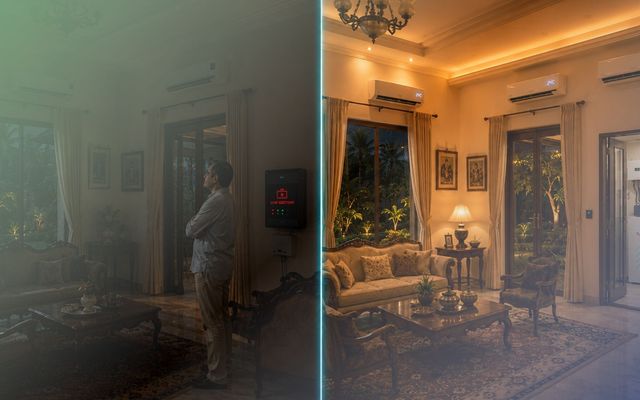
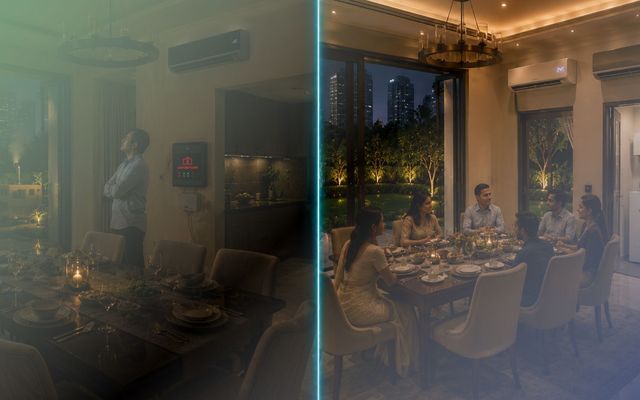
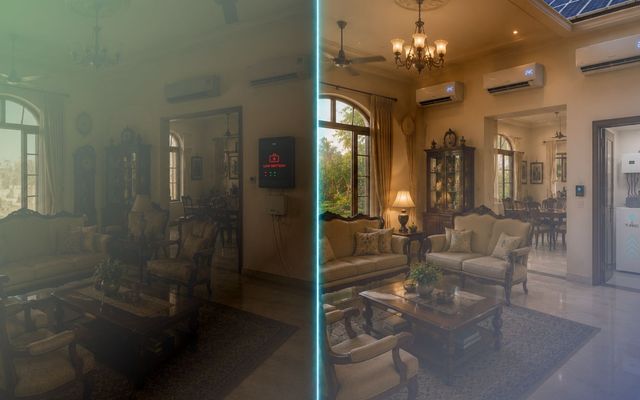
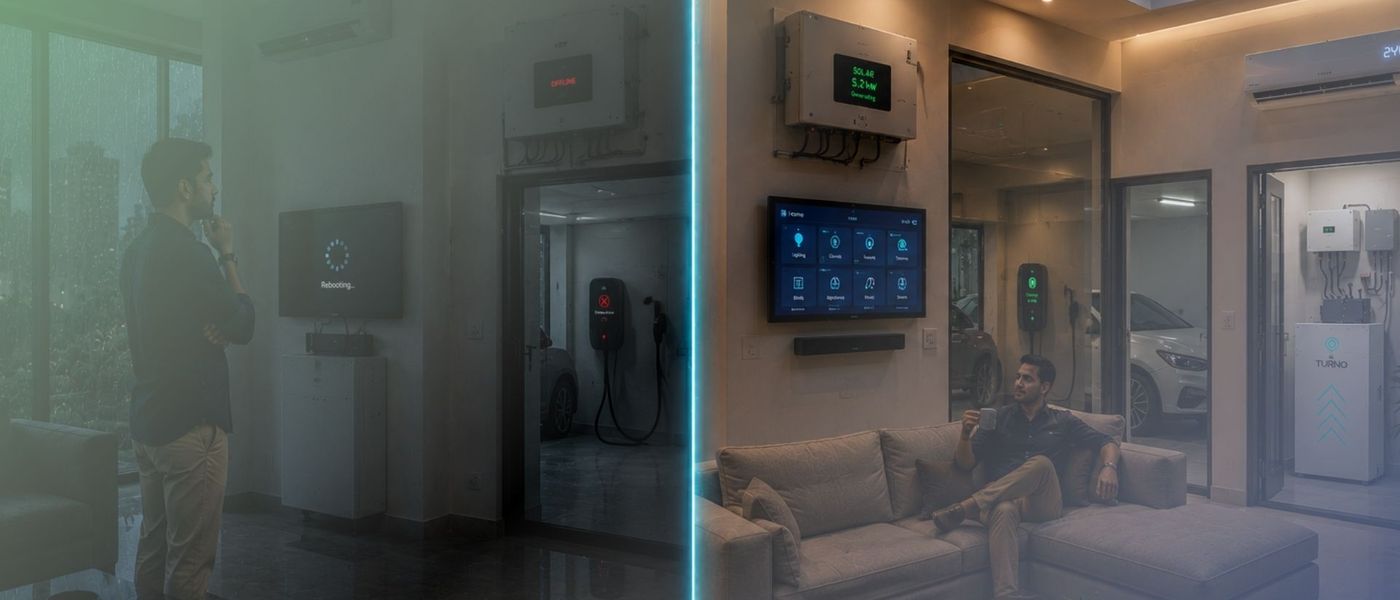
And when BESCOM fails, the inverter kicks in. The smart home reboots. The EV charging session drops. The ACs stop. The solar inverter disconnects from the grid and shuts down. Every system that was running seamlessly a moment ago is now either off or finding its feet again.
Koramangala figured out what was next in every other area. The inverter was never part of that story.
A connected home that disconnects when it matters most.
The Koramangala home runs on integration. The solar plant feeds into the home's consumption during the day. The EV charges on a schedule. The home automation manages every circuit without requiring attention. The climate control holds the interior at a precise temperature because it was set once and has not needed adjustment since.
A conventional inverter breaks every one of these integrations the moment the grid fails. The solar inverter shuts down because grid tied solar cannot operate without a grid reference. The EV charging session drops and needs a manual restart. The home automation reboots and loses its programmed state. The climate control loses its settings. The security system experiences a gap.
The home that was designed to run without requiring attention suddenly requires attention from everyone in it simultaneously.
That is not a power cut. That is a systems failure. And it happens every time BESCOM fails because the inverter was designed for a home that did not have these systems. It was not designed for this one.
BESCOM in Koramangala during summer and monsoon.
BESCOM manages a grid under significant seasonal stress. Bangalore's summer months push residential and commercial demand to peak simultaneously across one of India's fastest growing cities. Koramangala's grid, which serves a dense mix of residential and commercial properties, absorbs that surge imperfectly. Planned maintenance cuts, transformer overloads, and feeder faults are a routine feature. Monsoon adds its own set of outages as storms bring down feeder lines across the city.
For a home that runs on integration and connectivity, every outage is a reset event. The frequency of the outage matters less than what each one does to the systems the home was built around.
Turno BESS removes the reset event entirely.
Turno BESS runs the whole home. ACs, lift, and all.
When BESCOM fails, Turno BESS switches over in under 20 milliseconds. The ACs keep running. The smart home stays in its programmed state. The EV continues charging on its overnight schedule. The solar generation, stored in Turno BESS during the day, continues to power the home through the evening and overnight. The security system stays live. The home theatre keeps playing.
Nothing reboots. Nothing resets. No system loses its state. The integration that the home was built around stays intact because from every connected device's perspective, nothing changed.
This is not a better inverter. It is a permanent power source built for homes like this one. The grid and the rooftop solar become charging inputs. Turno BESS manages both continuously, deploying stored energy when the grid is unavailable and optimising consumption when it is not.
The home runs exactly as it was designed to run. Always.
The solar angle is particularly strong in Koramangala.
A Koramangala home with rooftop solar is generating meaningful power during the day and paying full grid rates in the evening. The solar plant goes quiet at 5 PM. The home's peak load arrives at 6 PM. Without storage, those two windows never meet.
Turno BESS stores the daytime solar generation and deploys it through the evening peak, when the home's load is highest and BESCOM's grid is most stressed. The solar investment that was already delivering daytime savings now delivers evening savings as well. The return on the panels improves significantly without any modification to the installation itself.
A quick look at the numbers.
A Koramangala home currently spending ₹3 to ₹5 lakh annually on diesel and generator maintenance eliminates most of that cost in the first year. The addition of evening solar utilisation delivers a further saving of ₹1.5 to ₹2.5 lakh annually depending on the home's solar capacity and evening consumption profile. Combined annual savings can reach ₹4 to ₹6 lakh for a large independent home.
Battery storage systems installed alongside solar qualify under central government clean energy incentive frameworks, with applicable GST and depreciation benefits depending on system configuration.
Built for what is next. Running on what is here.
Koramangala homes were built around a clear idea of what modern living should look like. The power infrastructure running them should match that idea.
Turno BESS runs the whole home. ACs, lift, and all. No reboot. No reset. No compromise. You stop thinking about power entirely.
It just runs.
Figure out the modern power backup alternative with BESS! Reach out to Turno to learn more.