South Goa has a different character from the north. The beaches are quieter. The villages are less visited. The villas in Cavelossim, Benaulim, and the Salcete belt have been built by people who specifically chose not to be in Assagao or Siolim. They wanted more privacy, more space, and more of the Goa that existed before it became a destination. The homes here are large, thoughtfully designed, and maintained with care. The garden is the point. The pool is the point. The veranda that catches the sea breeze in the evening is the point.
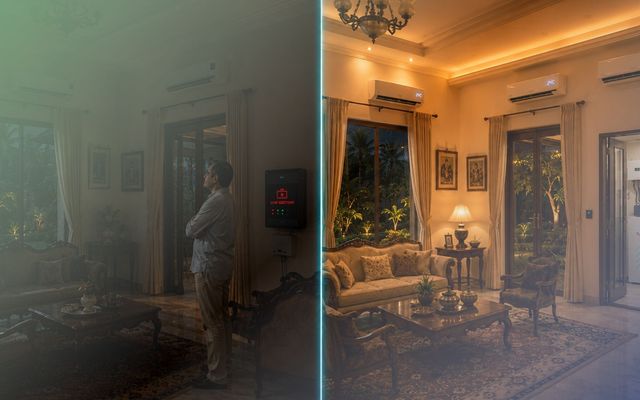
And when the Goa Electricity Department fails on a monsoon evening, the inverter kicks in. The fans keep running. The lights stay on. The pool pump stops. The outdoor lighting goes dark. The ACs stop. The veranda that was the point of the evening stops being what it was.
South Goa built the right life. The inverter has always been the wrong infrastructure for it.
South Goa's grid and the monsoon problem.
South Goa's distribution infrastructure serves a geography that is spread across coastal villages, paddy fields, and forested stretches that are genuinely difficult to maintain. The Goa Electricity Department's overhead lines in the Salcete and Mormugao talukas are vulnerable to monsoon storms between June and September. Fallen trees, damaged poles, and flooded substations produce outages that can last several hours. Scheduled maintenance cuts add to the count outside monsoon.
For a villa that is occupied year round or used as a premium second home, these outages are not events to be waited out. They are failures of the environment the property was built to deliver. And in South Goa, where the outdoor living spaces are the heart of the home, a power cut that kills the pool pump, the outdoor lighting, and the garden circuits is a failure that is felt immediately and completely.
The inverter has been the default response to this for years. It keeps a reduced version of the home running. Not the home as it was designed to be experienced. A reduced version of it.
What the inverter gets wrong for a South Goa villa.
A South Goa villa is not organised the way a city home is. The indoor and outdoor spaces are not separate. The pool area flows into the garden. The garden flows into the veranda. The veranda flows into the open plan living space. The boundary between inside and outside is deliberately unclear, because the experience the villa creates depends on all of it working together.
A conventional inverter was designed for a city home with a clear inside and outside. It keeps the inside running on reduced power and lets the outside go dark. For a South Goa villa, that distinction does not exist. Letting the outside go dark is not a partial failure. It is a complete failure of the environment the villa was built to create.
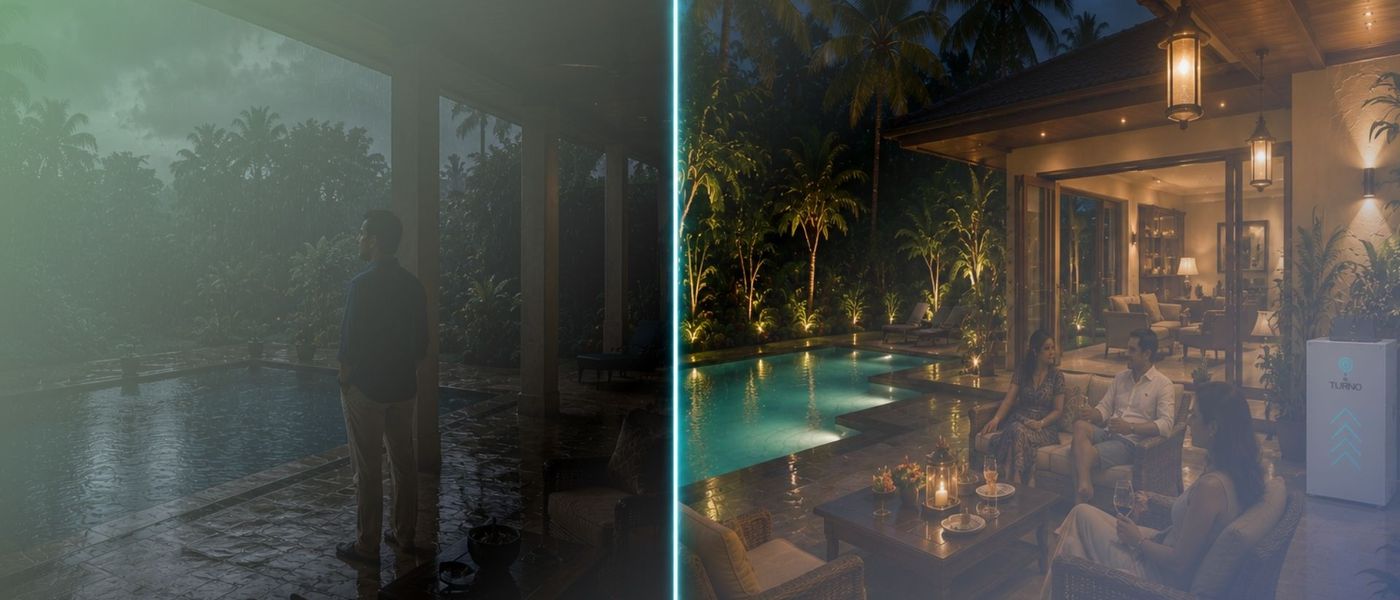
The pool pump stops. The garden lighting goes dark. The outdoor kitchen loses power. The veranda, which was where the evening was happening, stops being where the evening can happen. The villa, which was designed to feel a particular way, stops feeling that way.
Turno BESS does not make that distinction. It runs everything.
Turno BESS runs the whole villa. ACs, pool, outdoor lighting, and all.
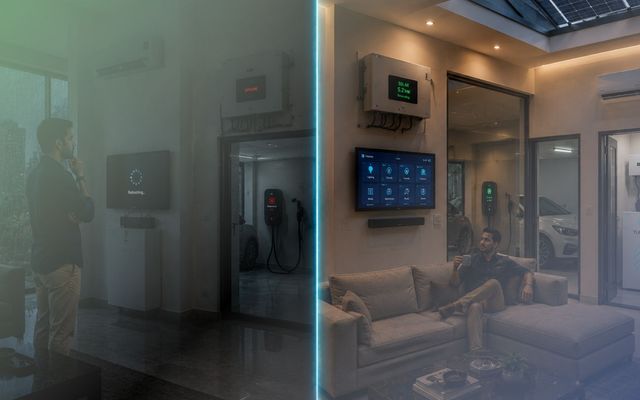
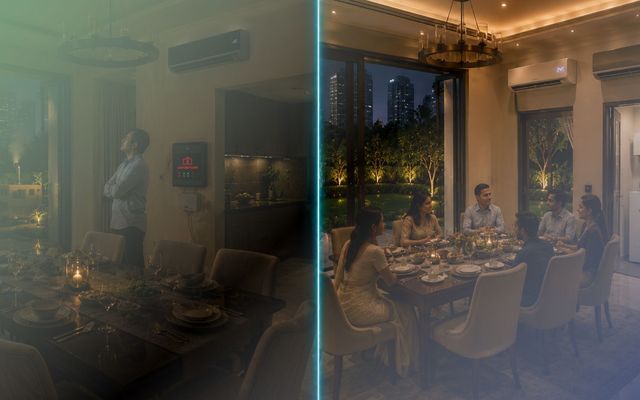
When the Goa Electricity Department fails, Turno BESS switches over in under 20 milliseconds. The pool pump keeps running. The outdoor lighting stays exactly as it was set for the evening. The garden circuits stay live. The ACs keep running. The outdoor kitchen stays on. The veranda continues to be where the evening was always going to happen.
Nothing stops. Nobody moves inside because the outside has gone dark. The villa continues to feel exactly as it was designed to feel, because Turno BESS was designed to make that possible regardless of what the grid is doing.
This is not a better inverter. It is a permanent power source. Silent, clean, and requiring no management attention. The grid becomes a charging input. When it is available, Turno BESS uses it. When it is not, Turno BESS does not need it. The villa runs on Turno BESS. All of it. The pool, the garden, the veranda, the ACs, and everything in between.
The solar dimension is compelling in South Goa.
South Goa receives strong coastal solar irradiance year round. The combination of latitude and minimal winter cloud cover means a well positioned rooftop system generates meaningfully across most months of the year. Many South Goa villas have already invested in solar, drawn by rising Goa Electricity Department tariffs and the appeal of energy independence.
Most of those installations are delivering partial value. The solar plant generates during the day when the villa is quiet. The home comes alive in the evening when the solar plant has gone quiet. Without storage, the evening load is served entirely by the grid or the generator.
Turno BESS stores the daytime solar generation and deploys it through the evening, when the villa's load peaks and the outdoor living spaces are in full use. The pool runs on solar energy that was captured six hours earlier. The garden lighting draws from stored generation. The outdoor kitchen stays live on power that cost a fraction of what the grid charges in the evening.
The solar investment, which was already delivering daytime savings, now delivers evening savings as well. The return on the panels improves significantly without any modification to the installation itself.
The rental dimension adds further value.
For South Goa villa owners who operate their properties as premium rentals, the case for Turno BESS has a direct revenue dimension. A villa that can honestly tell guests there is no diesel generator on site, that power cuts are handled instantly and silently, and that the pool, garden, and outdoor living spaces stay fully powered through every monsoon outage is telling a story that the South Goa premium rental market rewards.
That story shows up in reviews. It shows up in repeat bookings. And it shows up in the rates the property can sustain relative to comparable villas that are still running on diesel and inverters.
A single negative review mentioning a dark garden or a pool that stopped during a monsoon outage can sit on a listing page for years. Turno BESS removes that risk entirely.
A brief look at the numbers.
A premium South Goa villa currently spending ₹3 to ₹5 lakh annually on diesel and generator maintenance eliminates most of that cost in the first year. The addition of evening solar utilisation delivers a further saving of ₹1.5 to ₹2.5 lakh annually depending on the villa's solar capacity and evening consumption profile. Combined annual savings can reach ₹5 to ₹7 lakh for a well equipped independent villa.
Battery storage systems installed alongside solar qualify under central government clean energy incentive frameworks, with applicable GST and depreciation benefits depending on system configuration.
The right life. Running the right way.
South Goa was chosen specifically. The location, the village, the plot, the design: every decision was made with a clear idea of what the right life should feel like. The power infrastructure running that life should meet the same standard.
Turno BESS runs the whole villa. ACs, pool, outdoor lighting, and all. Not just fans and lights. You stop thinking about power entirely.
It just runs.
The right infrastructure for the right house! Reach out to Turno to learn more.