Civil Lines in Nagpur is one of Maharashtra's most established residential addresses. The independent homes here carry a history that most newer developments cannot replicate. Large plots, mature trees, wide roads, and bungalows that have been in families for generations. These are not homes that were assembled quickly. They were built with the intention of lasting, and they have. The garden has been tended for decades. The interiors have been refined across generations. The home reflects a standard that was set a long time ago and has been maintained ever since.
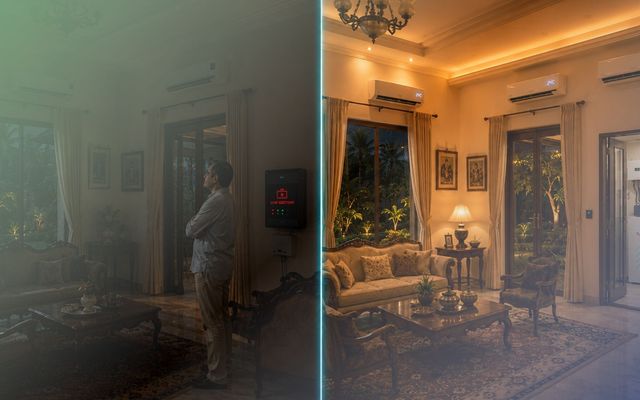
And when MSEDCL fails on a May afternoon when the temperature outside is 47 degrees, the inverter kicks in. The fans keep running. The lights stay on. The ACs stop. In Nagpur's summer, that is not an inconvenience. It is a health event.
The inverter was never built for Nagpur summers. It shows.
Nagpur's summer is in a category of its own.
Nagpur is one of India's hottest cities. Summer temperatures regularly exceed 45 degrees and frequently touch 48. The city sits in the geographical centre of the subcontinent, far from any moderating coastal influence, and absorbs solar radiation with an intensity that few other Indian cities match. The heat is not a background condition in Nagpur. It is the defining feature of eight months of the year.
For a large independent home in Civil Lines, the air conditioning is not a comfort feature. It is the system that makes the home habitable. When the ACs stop, the interior temperature begins to rise within minutes. Elderly family members, young children, and anyone with a health condition feel the impact immediately. The home that was built to provide a certain quality of life stops providing it the moment the inverter takes over and the ACs go off.
This is not a power cut in the way it is experienced in Bangalore or Pune. In Nagpur's summer, it is a more serious event. The inverter has always been inadequate for this specific context.
MSEDCL in Nagpur during summer.
Nagpur's grid manages a load that peaks dramatically during summer months as every home, office, and commercial establishment draws maximum cooling load simultaneously. MSEDCL's distribution infrastructure in Civil Lines and the surrounding areas faces planned maintenance cuts, transformer overloads, and feeder faults as a seasonal feature of Nagpur summers. The very months when power continuity matters most are the months when the grid is under maximum stress.
The diesel generator has been the standard response to this in Civil Lines for decades. It starts when the grid fails, the ACs come back on, and the household returns to a livable temperature. The fuel invoice arrives at the end of the month. The arrangement continues by inertia because nobody has presented a better option.
There is now a better option.
The inverter upgrade cycle that Nagpur homes have been through.
Most Civil Lines homeowners have upgraded their inverter setups at least once. Larger battery banks. Better inverter units. More circuits on backup. The goal has always been the same: keep the ACs running during a power cut.
It has never fully worked. The inverter was designed to shed heavy loads during a power cut. The AC is the heaviest load in a Nagpur home. No inverter upgrade changes that design philosophy. The battery gets larger. The AC still goes off.
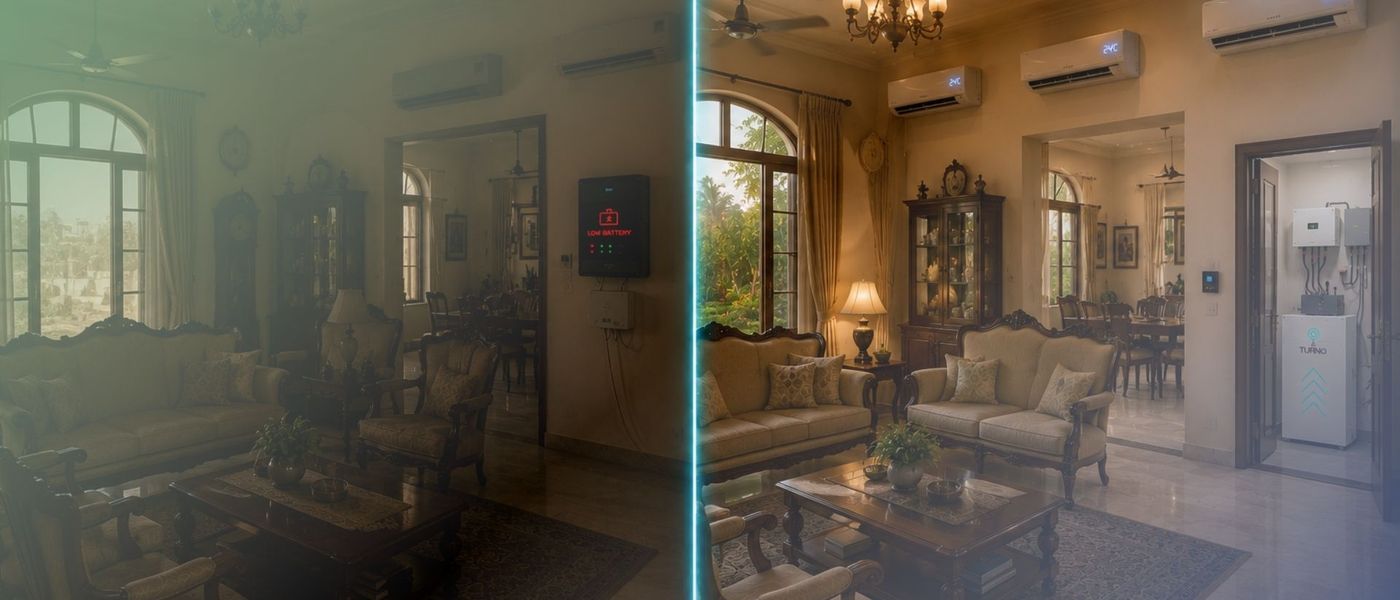
Turno BESS was designed without that limitation. It runs the full load. Including the ACs. Especially the ACs.
Turno BESS runs the whole home. ACs, lift, and all.
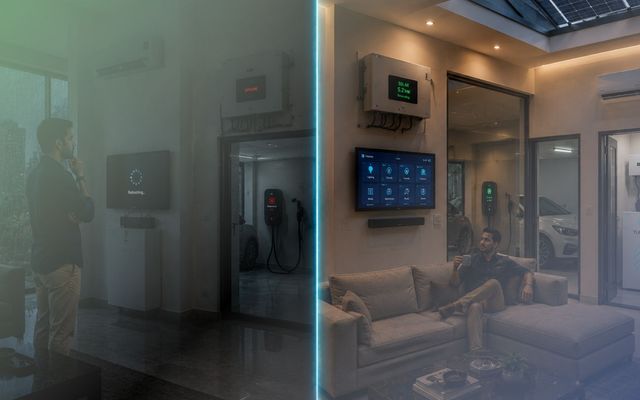
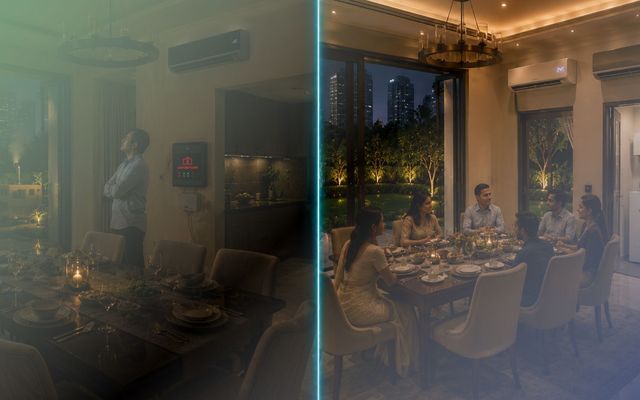
When MSEDCL fails, Turno BESS switches over in under 20 milliseconds. Every AC in the house keeps running. The lift keeps moving. The kitchen appliances stay live. The security system stays on. The home theatre keeps playing.
Nothing stops. Nobody in the house moves to a different room to find cooler air. The interior temperature does not change. The home continues to be what it was built to be: a place that provides a specific quality of life, regardless of what is happening on the grid outside.
In Nagpur's summer, this is not a luxury. It is the baseline the home was always supposed to deliver.
This is not a better inverter. It is a permanent power source. Silent, clean, and requiring no management attention. The grid becomes a charging input. When it is available, Turno BESS uses it. When it is not, Turno BESS does not need it. The home runs on Turno BESS. At full load. Through every MSEDCL outage. Through every Nagpur summer afternoon.
The rooftop solar opportunity in Nagpur.
Nagpur's exceptional solar irradiance, among the highest of any major Indian city, makes rooftop solar a particularly productive investment here. A well positioned rooftop system in Civil Lines generates meaningfully more per panel than the same installation in Mumbai or Bangalore.
Many Civil Lines homes have already invested in solar. Most are leaving value on the table every evening. The solar plant generates during the day. The home's peak cooling load runs through the afternoon and evening. Without storage, the evening load is served entirely by the grid or the generator.
Turno BESS stores the daytime solar generation and deploys it through the evening, when the home's cooling load is highest and the grid is most stressed. The solar investment earns its full return. The diesel generator becomes redundant. The home runs on energy it generated itself, through the hottest part of the day and into the evening.
A quick look at the numbers.
A Civil Lines home currently spending ₹3 to ₹5 lakh annually on diesel and generator maintenance eliminates most of that cost in the first year. The addition of evening solar utilisation delivers a further saving of ₹1.5 to ₹2.5 lakh annually depending on the home's solar capacity and evening consumption profile. Combined annual savings can reach ₹4 to ₹6 lakh for a large independent home.
Battery storage systems installed alongside solar qualify under central government clean energy incentive frameworks, with applicable GST and depreciation benefits depending on system configuration.
Civil Lines, through every summer.
This home was built to last. It has lasted. The power infrastructure running it should meet the same standard of permanence.
Turno BESS runs the whole home. ACs, lift, and all. Through every MSEDCL outage. Through every Nagpur summer afternoon. You stop thinking about power entirely.
It just runs.
Give your home a power infrastructure that can run the full load! Reach out to Turno to learn more.