Aundh Has Always Done Things Properly. Power Should Be No Different.
Aundh is one of Pune's most established residential addresses. The independent homes here have been built and rebuilt over decades by families who had a clear idea of what they wanted and the patience to get it right. These are not new homes finding their identity. They are settled homes with a settled standard. The interiors reflect years of considered decisions. The gardens have matured. The kitchens have been upgraded more than once. The home runs the way it does because the people who live in it made sure it would.
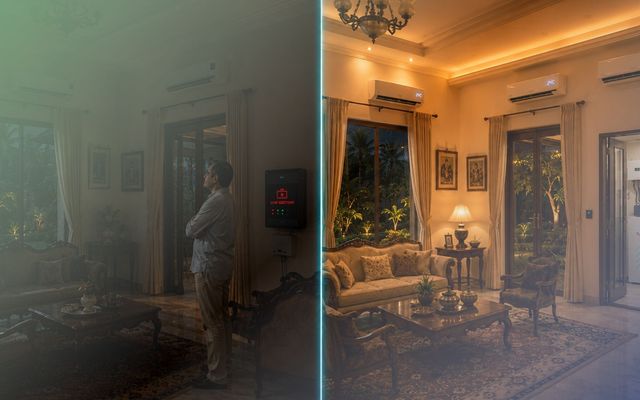
And when MSEDCL fails, the inverter kicks in. The fans keep running. The lights stay on. The ACs stop. The lift stops. The home that has been maintained to a clear and consistent standard stops meeting it.
Aundh has always done things properly. The inverter has always been the exception to that.
A home this established deserves infrastructure to match.
The independent homes in Aundh carry a particular character. They are large, multi-floor properties with mature gardens, fully equipped kitchens, and households that have lived in them long enough to know exactly how they want everything to work. Multiple ACs across multiple floors. A lift that serves elderly family members without question. A security system that runs without interruption. A kitchen that operates at full capacity during meal preparation.
These are not aspirational loads. They are the baseline the home was built to deliver.
A conventional inverter was never going to meet that baseline during a power cut. It was designed for a different home, built around a different assumption: that during a power cut, the household would shed its heavy loads and manage on fans and lights until the grid returned. That assumption has never applied in Aundh. These households do not manage down. They expect the home to run.
The inverter has delivered a compromise for decades. Turno ends it.
MSEDCL and Aundh during the monsoon.
Pune's monsoon places MSEDCL's distribution infrastructure under significant stress. Aundh's grid, which serves a dense and high consumption residential area, manages planned maintenance cuts and unscheduled outages from monsoon storms and transformer faults across the season. For a large independent home drawing load across multiple floors, each outage is felt immediately and completely.
The inverter has been the default response to this for as long as most Aundh homeowners can remember. It keeps a version of the home running. Not the version the home was built to deliver. A reduced version. Fans and lights while the ACs stop and the household adjusts.
For a home that has been built and maintained to a consistent standard over decades, that reduction has always been a misfit.
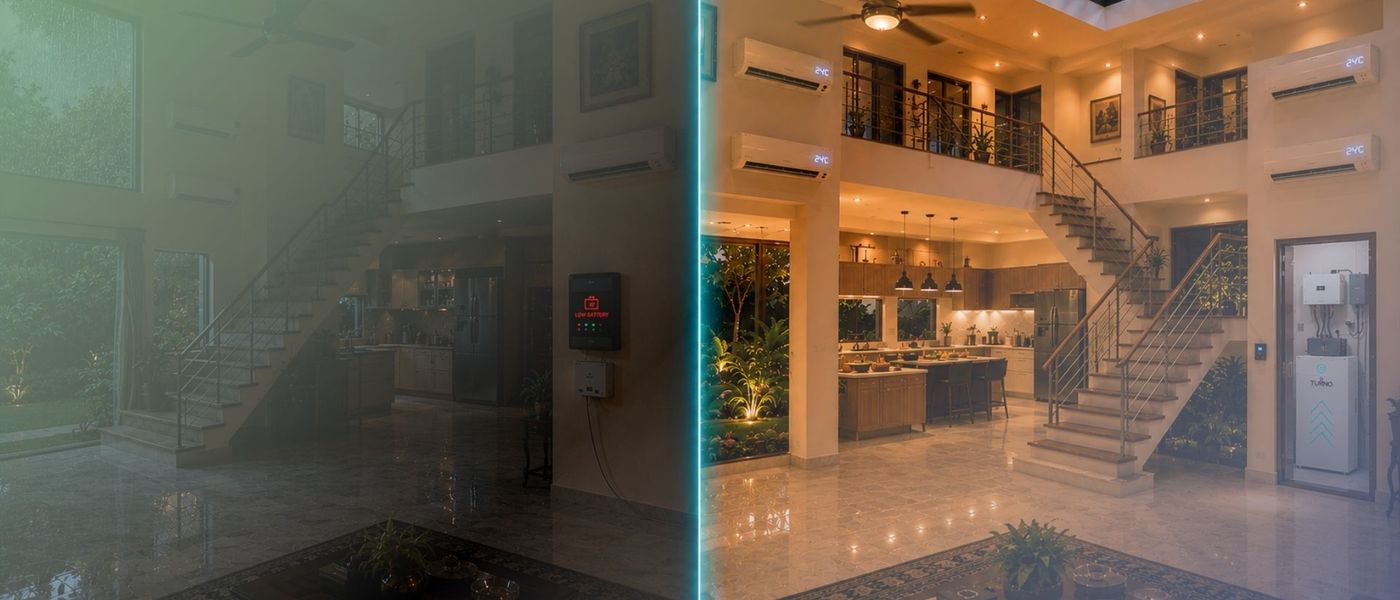
Turno runs the whole home. ACs, lift, and all.
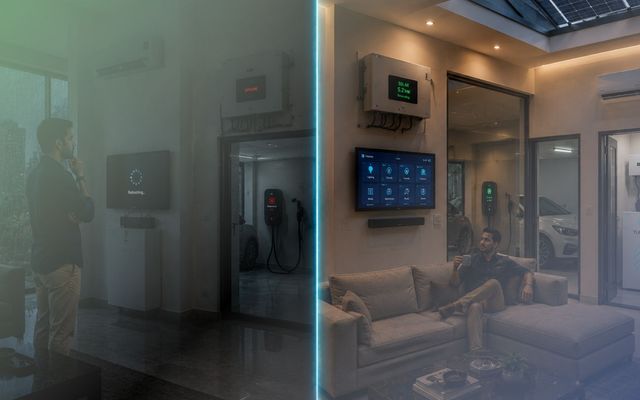
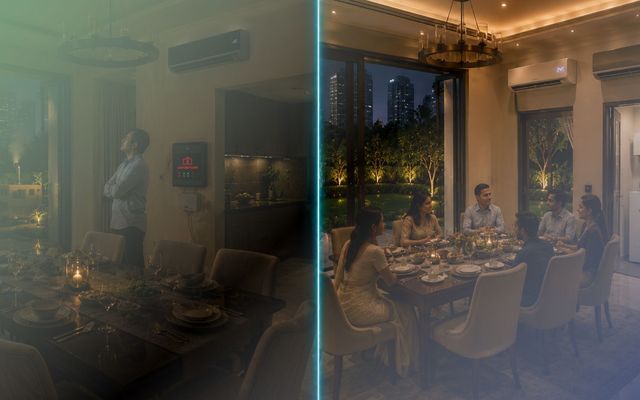
When MSEDCL fails, Turno switches over in under 20 milliseconds. Every AC across every floor keeps running. The lift keeps moving. The security system stays live. The kitchen appliances stay on. The garden lighting holds. The home automation stays in its programmed state.
Nothing stops. Nothing reboots. Nobody in the house adjusts to anything. The home continues to run at the standard it has always been maintained to, because Turno was built to make that possible regardless of what MSEDCL is doing.
This is not a better inverter. It is a permanent power source. Silent, clean, and requiring no management attention. The grid is a charging input. When it is available, Turno uses it. When it is not, Turno does not need it. The home runs on Turno. Across every floor. At full capacity. Exactly as it was built to run.
Not fans and lights. Everything.
The solar pairing makes particular sense in Aundh.
Many Aundh homes have already invested in rooftop solar, drawn by Pune's strong solar irradiance and the straightforward economics of reducing a grid electricity bill that has risen steadily over the years. Most of those installations are delivering partial value. The solar plant generates electricity during the day. The home's peak load arrives in the evening. Without storage, the evening load is served entirely by the grid.
Turno stores the daytime solar generation and deploys it through the evening, extending the value of the solar investment into the hours when the home actually needs it most. The grid bill drops. The solar investment earns its full return. The home runs on energy it generated itself, through the evening and overnight.
A quick look at the numbers
An Aundh home currently spending ₹3 to ₹5 lakh annually on diesel and generator maintenance eliminates most of that cost in the first year. The addition of evening solar utilisation delivers a further saving of ₹1.5 to ₹2.5 lakh annually depending on the home's solar capacity and evening consumption profile. Combined annual savings can reach ₹4 to ₹6 lakh for a large independent home.
Battery storage systems installed alongside solar qualify under central government clean energy incentive frameworks, with applicable GST and depreciation benefits depending on system configuration.
Properly done. Finally, all the way through.
This home has been done properly for decades. The garden is right. The kitchen is right. The interiors are right. The power infrastructure that runs all of it should be right too.
Turno runs the whole home. ACs, lift, and all. Not just fans and lights. You stop thinking about power entirely.
It just runs.
Give your home the upgrade it deserves with BESS! Reach out to Turno to learn more.