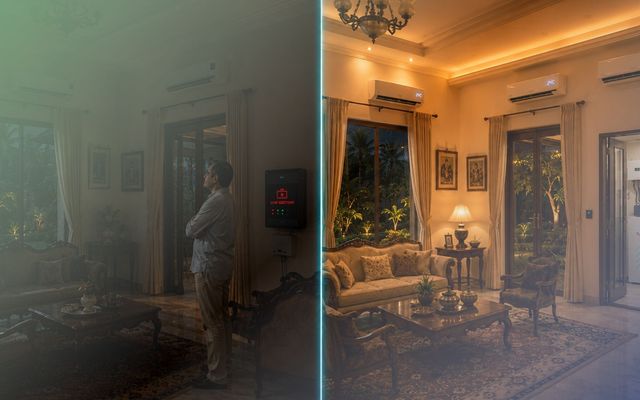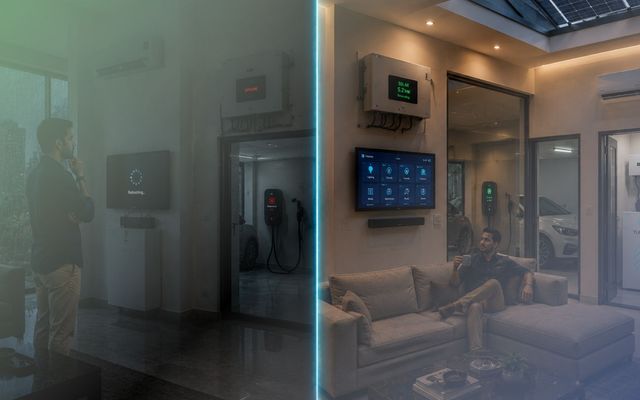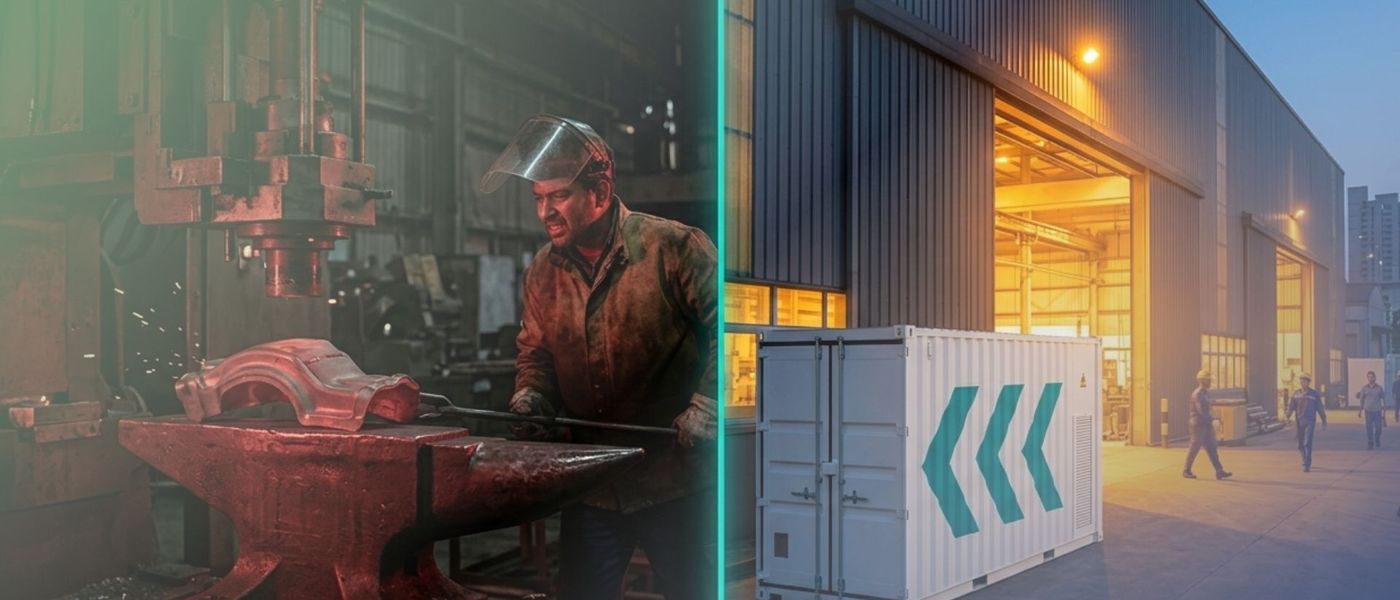
Jamshedpur is one of India's oldest planned industrial cities. Built around the Tata Steel complex, it has grown into a dense ecosystem of ancillary manufacturers, engineering units, auto component suppliers, and processing facilities. Many of these factories have operated here for decades. They know how to manage costs, manage labour, and manage production cycles. What they have not been able to manage well is the electricity bill, specifically the portion of it that runs through the diesel generator.
The grid situation in Jamshedpur for industrial consumers
Jamshedpur's non-Tata industrial areas are served by Jharkhand Bijli Vitran Nigam Limited (JBVNL). The Adityapur industrial area, which houses a significant concentration of MSME and ancillary manufacturing units, is supplied from the Gamharia grid substation. That substation has historically operated under supply constraints: demand in the Kolhan division has regularly outpaced available supply, particularly during summer months when load surges. The result is scheduled load shedding, sometimes running four to six hours a day in affected areas, and unscheduled outages on top of that from aging overhead infrastructure.
SME units across Jharkhand's industrial areas have formally reported production halts of three to fifteen hours due to extended power cuts. For a factory with time-sensitive orders, a production line that depends on sequential processes, or equipment that requires controlled restarts, every outage hour carries a direct cost.
The response across most Jamshedpur factories has been the same for years: run a diesel generator and absorb the cost.
What diesel actually costs a Jamshedpur factory
The all-in cost of running a diesel generator, covering fuel, engine oil, filters, coolant, and routine service, works out to approximately ₹22 to ₹25 per unit. This figure is widely cited and widely understood. What is less often calculated is how it compares to the grid rate that is being supplemented.
Under the JSERC tariff order effective April 1, 2026 (JSERC tariff orders), HT industrial consumers in Jharkhand pay approximately ₹7.00 to ₹8.00 per unit for energy charges, with demand charges on top. The 6.12 percent tariff revision effective from April 1, 2026 has pushed rates higher than the previous cycle, and JBVNL's tariff petition for the MYT control period through FY 2030-31 signals further upward pressure on industrial tariffs in the years ahead.
Even at current rates, the gap between grid power and diesel power is ₹15 to ₹17 per unit. For a Jamshedpur factory running a 200 kW load on a diesel generator for five hours a day:
- DG cost: 200 kW x 5 hrs x ₹23/unit = ₹23,000/day
- Grid equivalent: 200 kW x 5 hrs x ₹7.50/unit = ₹7,500/day
- Daily overpayment: approximately ₹15,500
- Monthly overpayment: approximately ₹4.65 lakh
For factories running heavier loads or longer daily outage windows, the number scales quickly. And unlike grid tariffs, diesel prices are not subject to regulatory ceilings. They move with global crude prices, making this a cost line with both high absolute value and high unpredictability.
The maintenance dimension that compounds the cost
High generator runtime creates a second cost problem that rarely gets tracked on the same spreadsheet as fuel spend.
Diesel generators in heavy industrial use require a major service interval every 500 to 1,000 hours of runtime. For a factory where the generator runs five hours a day, that is a service interval every three to six months. In Jamshedpur's climate, high humidity during monsoon and peak heat in April and May accelerate wear on filters, alternator windings, and cooling systems. Unplanned failures during an outage do not just mean a repair bill. They mean the factory has no power at all, which for a continuous-process line or a heat-treatment unit can mean material loss and order delays on top of the repair cost.
These costs appear in the maintenance budget, not the electricity budget. That separation tends to make the true cost of DG dependence invisible in monthly reviews.
How BESS changes the cost structure for a Jamshedpur factory
A Battery Energy Storage System charges from the grid during normal supply hours and takes over instantly when the grid drops. The switchover happens in milliseconds, with no startup delay and no fuel consumption.
For a Jamshedpur factory, the financial impact is direct:
DG runtime drops significantly. For outages of a few hours, the BESS serves the load without the generator starting. For longer outages, the BESS handles the initial period while the generator starts up, reducing the total fuel burn. Monthly diesel expenditure falls in proportion to how much of the current DG runtime the BESS covers.
Cost per unit falls significantly. The delivered cost of BESS electricity, grid source rate plus approximately ₹2.50 to ₹3.00 per unit for the system, works out to around ₹10 to ₹11 per unit. Against diesel at ₹22 to ₹25, the saving per unit is ₹12 to ₹15.
Production continuity improves. The instant switchover means machinery, PLCs, process controls, and instrumentation stay live without interruption. There are no restart sequences, no material losses from interrupted processes, and no production gaps attributable to power.
A note on the Adityapur and Gamharia industrial mix
Jamshedpur's ancillary and MSME cluster includes a wide range of manufacturing categories: forging and casting units, machining centres, packaging lines, food processing facilities, and precision engineering units. The sensitivity to power interruptions varies by type.
For forging and heat treatment units, a power cut mid-process can mean scrapped material. For precision machining, it means restarting from reference and losing the work in progress. For packaging and food processing lines, it means interrupted batches and potential spoilage. In all of these cases, the argument for BESS is not only about the per-unit cost saving. It is about eliminating a production risk that diesel generators, with their startup delay, cannot fully address.
Where to start
Three data points from the last twelve months will tell you whether BESS makes financial sense for your Jamshedpur facility:
- Annual diesel expenditure: total fuel and maintenance spend on the generator over the past year
- Daily generator runtime: average hours per day the generator runs, broken down between outage-driven use and planned supplementation
- Sensitive loads: which processes or machines cannot tolerate even a brief interruption, and whether those are currently protected by any existing UPS or inverter system
With these three inputs, the saving from replacing generator hours with BESS can be calculated with reasonable precision for your specific load profile.
Replace your Diesel Generator with a BESS! Reach out to TurnoVolt to learn more.