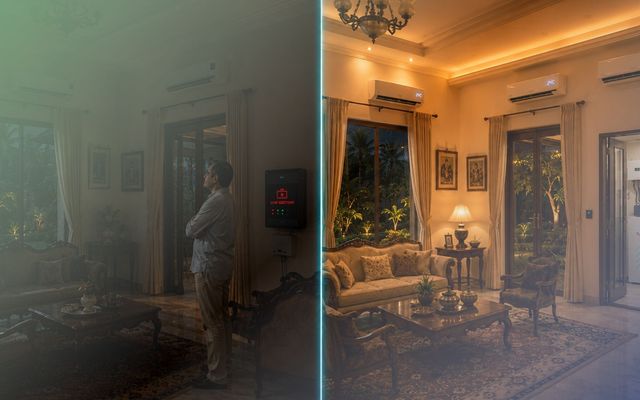
There is a specific kind of home that South Delhi produces. The bungalow in Vasant Vihar, which has been in the family for thirty years, has been rebuilt twice to get it exactly right. The independent house in Shanti Niketan, where the landscaping alone took a year. The property in Anand Niketan, where every room reflects a decision that was made with complete clarity about what the standard should be.
These homes do not announce themselves. They do not need to. The quality is evident to anyone who enters. And when BSES fails on a Delhi summer afternoon, the inverter kicks in, the ACs stop, and for the next few hours, the home runs on fans and lights.
That is not a power cut. That is an insult to everything the home represents.
The inverter's promise and where it falls short
Every premium South Delhi home has been through the inverter upgrade cycle. The original unit was replaced with a better one. The battery bank was expanded. More circuits were added to the backup load. And still, when the grid fails in June, the ACs go off.
That is not a coincidence. It is the design.
A conventional inverter was built around a specific assumption: that during a power cut, the household would shed its heavy loads and manage on reduced power until the grid returned. Fans and lights. Maybe a television. The inverter holds that assumption of the reduced load through the battery until BSES comes back.
That assumption has never applied to a home in Vasant Vihar or Golf Links. These homes were not built to be managed down. The air conditioning runs because a Delhi summer without it is not livable. The lift serves elderly family members who cannot take the stairs. The security system runs without interruption. The home automation, the kitchen appliances, the wine storage: none of these pause gracefully when the inverter takes over. They simply stop.
The inverter was never going to solve this. It was built for a different kind of home.
Delhi summers are a structural challenge, not a seasonal inconvenience.
BSES and TPDDL manage a grid that serves one of the world's most densely populated urban areas. Delhi summers push residential demand to its absolute peak for months. Every home, every office, every building draws maximum load simultaneously. The distribution infrastructure absorbs that surge imperfectly. Planned maintenance cuts, transformer overloads, and feeder faults are a routine feature of Delhi summers. And in a South Delhi bungalow, where the load is significantly higher than the average residential connection, the impact of a grid failure is felt immediately and completely.
The inverter has been the answer to this problem for decades. In a home at this level, it has always been the wrong answer.
TurnoVolt’s BESS runs the whole home. ACs, lift, and all.
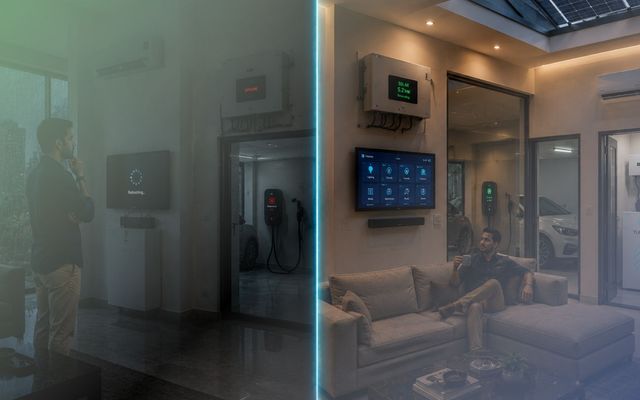
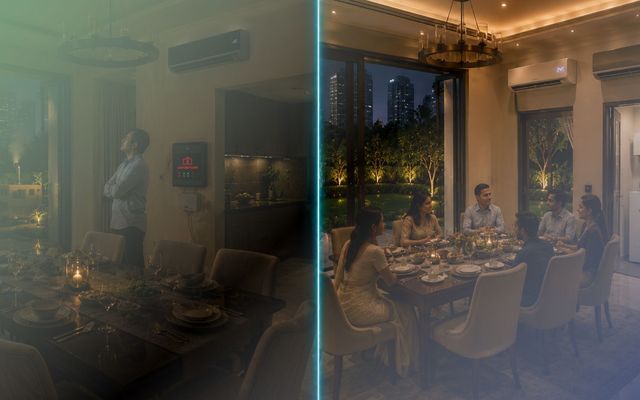
When BSES fails, TurnoVolt’s BESS switches over in under 20 milliseconds. The ACs keep running at the temperature they were set to. The lift keeps moving. The security system stays live. The home automation holds its programmed state. The kitchen appliances stay on. The wine cooler holds its setting.
Nothing stops. Nothing reboots. Nobody in the house adjusts to anything.
Not because the power cut was handled well. Because from every appliance's perspective, there was no power cut.
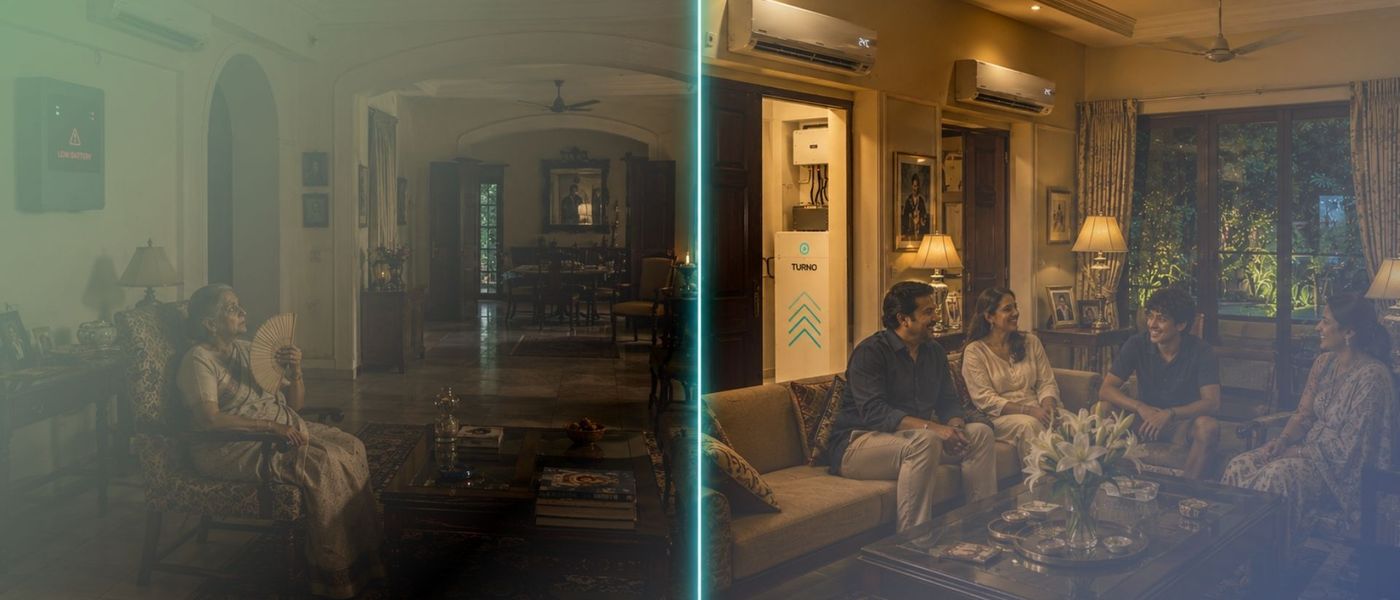
A Delhi summer afternoon becomes an event that happens outside the home. Inside, nothing changes. The home runs exactly as it was designed to run, because Turno was designed to make that possible.
The difference between managing a power cut and removing it.
An inverter manages a power cut. It keeps a reduced version of the home running until the situation resolves. The household adjusts. The standard, temporarily, drops.
BESS removes the power cut as a lived experience. The grid fails. BESS is already running. The home does not register the difference. There is no situation to manage and no standard that drops.
This is not a better inverter. It is a different category entirely. A permanent power source that happens to be silent, happens to require no fuel, and happens to run everything the home was built to run.
Not a backup. A power plant.
A quick look at the numbers
A premium South Delhi bungalow currently spending ₹3 to ₹5 lakh annually on diesel and generator maintenance eliminates most of that cost in the first year. Delhi's strong summer irradiance makes rooftop solar a productive pairing with Turno. Stored daytime solar covers evening and overnight consumption, reducing the grid bill further. Combined annual savings can reach ₹4 to ₹6 lakh for a large independent home.
Battery storage systems installed alongside solar qualify under central government clean energy incentive frameworks, with applicable GST and depreciation benefits depending on system configuration.
South Delhi, uninterrupted.
This home was built with intention. Rebuilt with intention. Maintained with intention. The power infrastructure that runs it deserves the same.
BESS runs the whole home. ACs, lift, and all. Not just fans and lights. You stop thinking about power entirely.
It just runs.
Give your home a power infrastructure that functions with intention. The TurnoVolt team is waiting.