Gurugram has rebuilt itself into one of India's most ambitious addresses. The towers along Golf Course Road, the villa clusters off Sohna Road, and the independent bungalows tucked behind the DLF phases represent a standard of living that is genuinely world-class. The cars in the driveways are right. The interiors have been done by the right people. The smart home integrator has been in and out three times, getting the automation exactly as it should be.
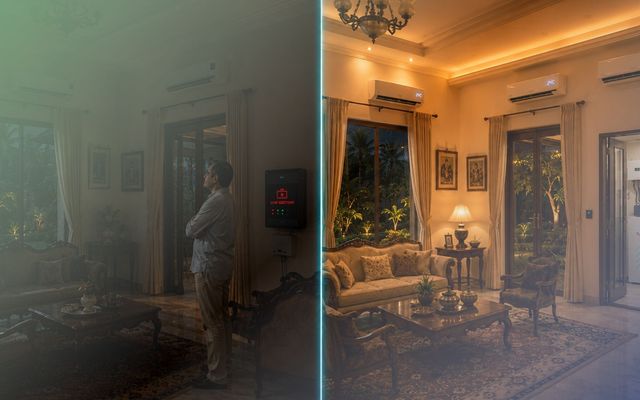
And then the grid goes down on a June afternoon when the temperature outside is 44 degrees, and the air conditioning stops.
DHBVN, which serves most of Gurugram's residential areas, manages a grid under significant seasonal stress. North Indian summers push residential demand to its absolute peak simultaneously across millions of homes, and the distribution infrastructure, despite ongoing investment, does not absorb that surge without fault. Planned maintenance cuts, transformer overloads, and feeder faults are a routine feature of Gurugram summers. Monsoon brings its own set of outages as storms damage overhead lines across the Haryana grid.
For most Gurugram bungalows, the answer has always been a diesel generator. It starts, it runs, and the cost gets absorbed into the monthly household budget without much scrutiny. The generator has been there so long that it has become furniture.
What the generator is actually costing a Gurugram home
The diesel generator in a premium Gurugram home is one of those costs that never gets examined directly because it has never had a serious alternative. Fuel invoices arrive, maintenance calls happen, and the annual overhaul gets scheduled without anyone asking whether the whole arrangement still makes sense.
It does not. A premium Gurugram bungalow running a generator through summer outages and peak load periods spends ₹3 to ₹5 lakh annually on diesel and maintenance. That figure does not include the emergency repair calls that arrive without warning, the shortened service life of a generator running through Gurugram's extreme summers, or the fuel storage overhead that comes with keeping an adequate diesel inventory through a season when supply chains are under pressure.
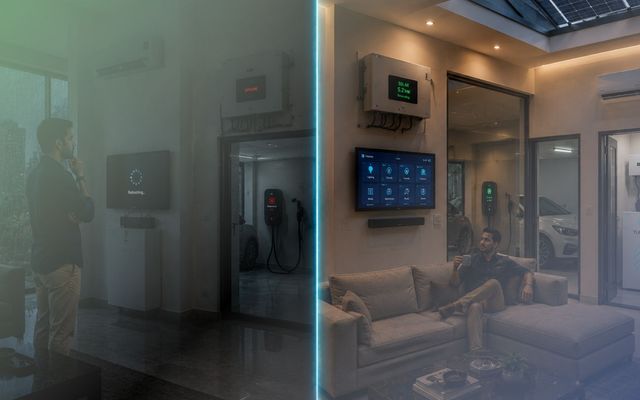
Beyond the cost, there is the experience of it. A diesel generator running at 2 PM on a June afternoon is audible in every room of the house. The exhaust finds its way into the garden, into the kitchen ventilation, and into the carefully climate-controlled interior that the generator is supposed to be protecting. The smart home reboots. The EV charging session resets. The wine storage alarm triggers. The generator kept the lights on, technically. Everything else is a reset.
The 20 millisecond difference
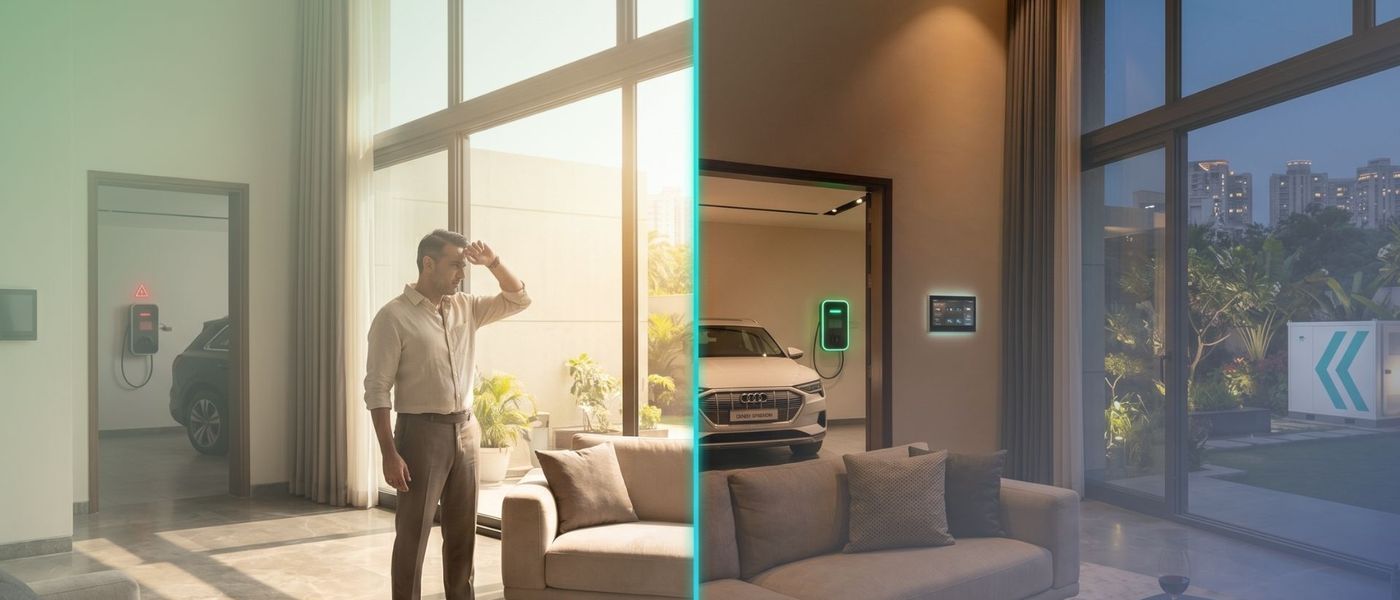
A Battery Energy Storage System does not start. It is already running. It monitors grid supply continuously and switches over in under 20 milliseconds when the grid fails, a gap so small that no device in the home registers a change. The air conditioning holds its temperature. The home theatre keeps playing. The smart panels stay in their programmed state. The EV continues charging without interruption.
There is no noise, no exhaust, and no fuel to manage. The BESS charges from the grid during normal hours or from rooftop solar during the day, and it does all of this without requiring any management attention from anyone in the household. It sits in the utility area or garage, does its job without announcement, and never gives a reason to think about it.
For a home in Gurugram that has been built to run effortlessly, that is precisely the standard its power infrastructure should meet.
A quick look at the numbers
For a premium Gurugram bungalow currently spending ₹3 to ₹5 lakh annually on diesel and generator maintenance, a BESS eliminates most of that cost in the first year. Paired with rooftop solar, which Haryana's strong summer irradiance supports well, the combined saving on diesel replacement and grid optimisation can reach ₹4 to ₹6 lakh annually for a large independent home.
Battery storage systems installed alongside solar qualify under central government clean energy incentive frameworks, with applicable GST and depreciation benefits available depending on system configuration. For a homeowner who applies the same rigour to financial decisions as to every other decision in the home, the case is straightforward.
The critical upgrade Golf Course Road needs
Every other decision that defines a premium Gurugram home has been made with intention. The power infrastructure that runs it deserves the same intention. A BESS is not a utility purchase. It is the upgrade that makes everything else in the home work the way it was designed to, through a June afternoon, through a monsoon evening, and through every DHBVN outage that would otherwise have made its presence felt.
Golf Course Road does not run on uncertainty. Neither should your home.
Give your Villa the upgrade it deserves with BESS! Reach out to TurnoVolt to learn more.