Yelagiri is having a quiet moment in Tamil Nadu's holiday calendar. Tucked away in the Vellore district at about 1,100 metres, it sits close enough to Chennai, Bengaluru, and Vellore to fill up on weekends without the crowds that Ooty or Kodaikanal attract. Villa owners and AirBnB hosts here are sitting on a genuine opportunity: a destination with growing demand, a tranquil setting, and the kind of property that guests return to.
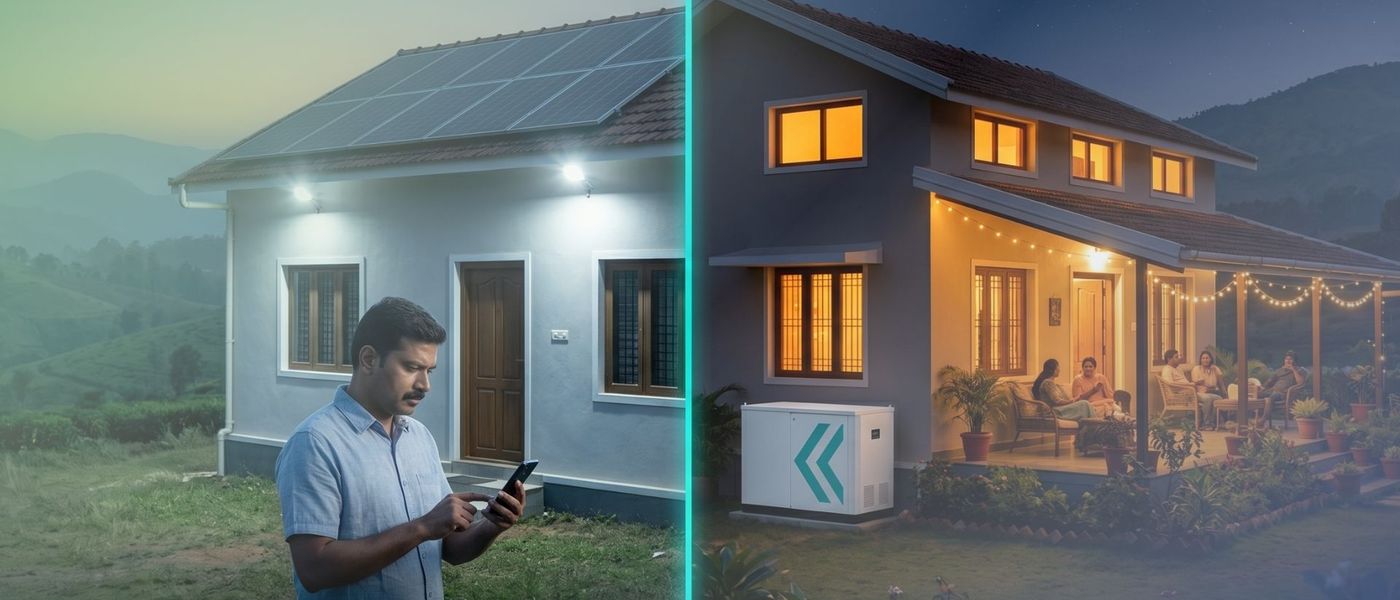
Many of them have already invested in rooftop solar. And quite a few are advertising it: solar lamps, inverter backup, and eco-friendly credentials appear in AirBnB listings across Yelagiri as selling points. The instinct is right. The execution has a gap in it.
The problem with solar in Yelagiri, and why it matters for your guests
A solar panel generates electricity when the sun is shining. In Yelagiri, that window runs from roughly 8 AM to 5 PM on clear days. Tamil Nadu receives strong solar irradiance, and properties at Yelagiri's elevation with south-facing aspects can generate meaningful power during those hours.
The problem is when your guests actually need power.
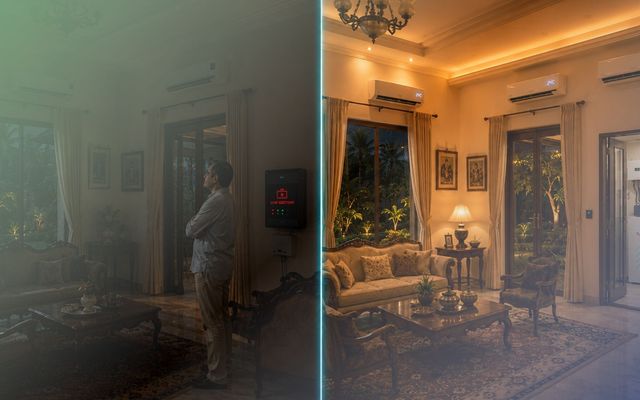
A villa stay in Yelagiri follows a predictable rhythm. Guests arrive in the afternoon, settle in, and their real energy consumption begins in the evening: hot water for showers, kitchen appliances for dinner, air conditioning as the night temperature drops, outdoor lighting for the garden or lawn area, and entertainment systems through the evening. By the time all of this is running, the solar plant shut down at least two hours ago.
Yelagiri's grid, served by TNPDCL under the TNERC tariff structure, also runs scheduled maintenance shutdowns that typically fall between 9 AM and 5 PM. These are published in advance and are a routine feature of rural Tamil Nadu's distribution maintenance calendar. The pattern is almost perfectly inverted from what a villa owner needs: the grid is most likely to be unavailable during solar generation hours, and fully available again just as the solar plant stops generating.
The result is a villa that draws almost entirely from the grid during the expensive evening hours, while the solar investment does its work earlier in the day when guests are out exploring, sleeping in, or not yet checked in.
What this costs a Yelagiri villa owner
Yelagiri villas on AirBnB charge between ₹3,000 and ₹12,000 per night depending on size, amenities, and season. A property at the mid-to-upper end of that range has the profile where energy infrastructure matters: pool pumps, multiple air-conditioned rooms, a well-equipped kitchen, outdoor lighting, and possibly a geyser or two.
Under the TNERC domestic tariff, residential consumers in Tamil Nadu pay ₹3.50 per unit for consumption between 101 and 200 units per month and ₹4.60 per unit above 200 units (TNERC Tariff Orders). For a villa with heavy guest loads, monthly consumption frequently runs well above 200 units, placing most of the bill in the higher slab.
Solar generation during the day offsets some of this. But the evening load, which is where most of the consumption actually falls on occupied nights, is served entirely by grid power.
For a villa consuming 20 units during peak guest hours (6 PM to 11 PM) on an occupied night:
- Grid cost at higher slab: 20 units x ₹4.60 = ₹92 per occupied night
- If served by stored solar at ₹1.50 to ₹2/unit effective cost: approximately ₹30 to ₹40
- Saving per occupied night: approximately ₹50 to ₹60
- Saving across 15 occupied nights per month: approximately ₹750 to ₹900/month
For higher-load villas with pools, multiple ACs, and full kitchen use, the nightly consumption and the saving both scale up.
How BESS changes what your solar investment actually delivers
A Battery Energy Storage System stores the solar generation that exceeds the villa's daytime consumption and makes it available in the evening when guests need it most.
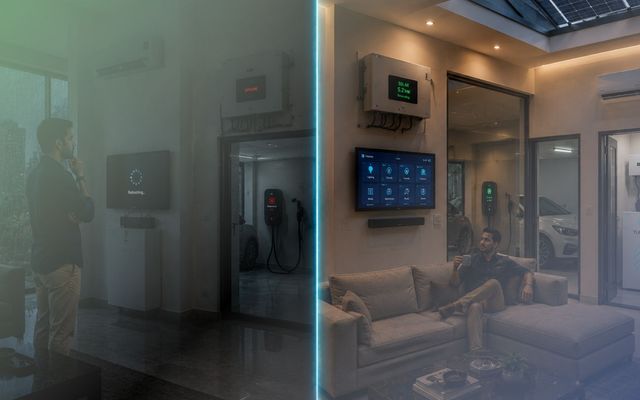
During the day, when guests are out or the villa is quiet between checkouts and check-ins, the BESS charges from excess solar generation. From 5 PM onwards, when arrivals begin, the BESS discharges into the villa's circuits. The air conditioning, water heating, kitchen, and outdoor lighting all run on stored solar power. The grid is drawn on only when the battery reserve runs low or for loads that exceed what the BESS can supply.
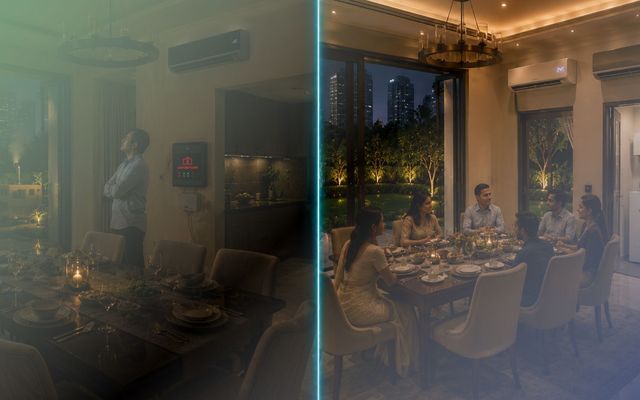
For your guests, the experience is seamless. There is no gap, no transition, and no moment where the power source changes. The villa simply runs. Quietly, cleanly, and without interruption.
The backup benefit comes at no extra cost
A BESS sized for solar storage also serves as an instant backup when TNPDCL schedules maintenance or when an unscheduled fault interrupts supply. The switchover happens in milliseconds. Your guests, whether they are in the middle of a shower, cooking a meal, or watching a film, experience nothing.
For a villa where the entire guest experience depends on comfort and uninterrupted amenities, this is not a minor benefit. It is the difference between a five-star review and a four-star one with a comment about the power going out.
What it does for your listing
Clean energy is increasingly a booking consideration, not just a feel-good feature. A Yelagiri villa that genuinely runs on solar through the evening, with a backup that keeps everything live during grid outages, has a story worth telling on its listing:
- Solar-powered evenings: your stay runs on energy we generate on-site
- No diesel generator noise or fumes
- Uninterrupted power throughout your stay, even during grid outages
These are statements that resonate with the guest profile drawn to Yelagiri: urban professionals looking for a genuine break, families who value a quiet setting, and eco-conscious travellers who are increasingly choosing properties that match their values.
A straightforward starting point
If your Yelagiri villa has rooftop solar already installed, two numbers from recent electricity bills will tell you whether BESS makes sense:
- How many units is the solar plant exporting to the grid under net metering each month? Every exported unit is solar generation that was sold at a low feed-in rate rather than being used at a higher value during peak guest hours.
- What is the villa's electricity consumption during evening hours on occupied nights? This is the direct saving window.
For most Yelagiri villa owners with solar already in place and regular AirBnB occupancy, the case builds quickly. The solar investment was the first step. BESS is what makes it work when your guests are actually there.
Leverage on the solar panels at your Villa with a BESS! Reach out to TurnoVolt to learn more.