-1400x600.jpg)
Hyderabad has produced a generation of homeowners who are exceptionally good at making decisions. The city's technology, pharmaceutical, and financial sectors have created a concentration of genuinely sophisticated wealth, and that sophistication shows in the homes that have been built across Jubilee Hills, Banjara Hills, and the newer villa developments in Kokapet and Nanakramguda. These are not homes that were assembled from a catalogue. They reflect considered choices about architecture, material, technology, and comfort.
Which makes it all the more surprising that the power infrastructure running most of them is a diesel generator that has not been reconsidered in a decade.
Hyderabad's grid and what it means for a premium home
Hyderabad's electricity supply is managed by TSSPDCL across most of the city's residential areas. The grid here is reasonably reliable by Indian standards, but reasonably reliable is not the same as uninterrupted. Summer months, when Hyderabad's temperatures climb well above 40 degrees, and every air conditioner in the city runs simultaneously, place the distribution network under significant stress. Outages during peak summer afternoons are a known and recurring feature. Monsoon brings transformer faults and feeder failures as heavy rains and strong winds affect overhead infrastructure across the city.
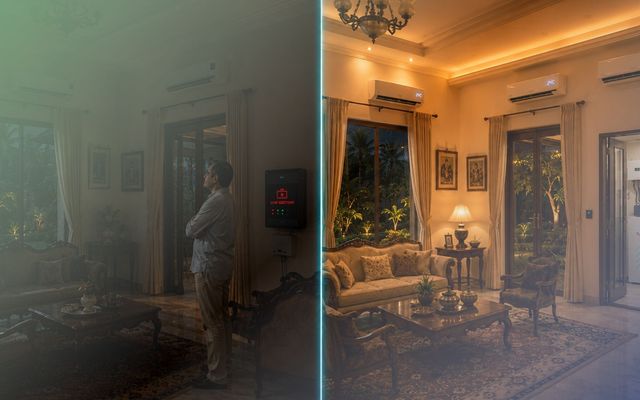
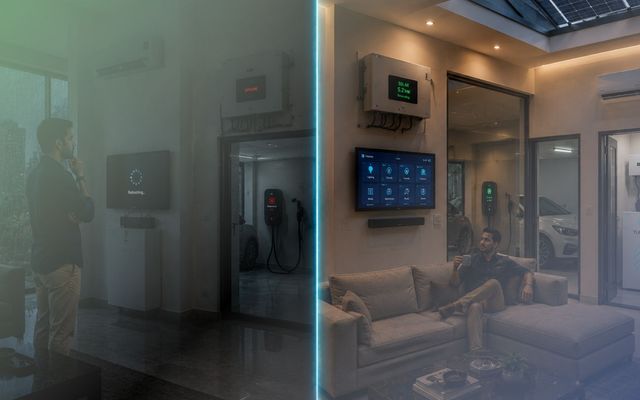
For a home in Jubilee Hills or Banjara Hills, a grid failure on a May afternoon is not a minor event. It is the air conditioning going off in 42-degree heat. It is the smart home rebooting. It is the security system losing power. It is the EV in the garage resetting its charging session. And it is the diesel generator starting up in the driveway, announcing to the neighbourhood that the grid has failed and that this particular home's backup plan involves combustion.
The new cost that changed the equation
Until recently, a Hyderabad homeowner managing grid outages with a diesel generator was making a straightforward, if expensive, choice. The generator ran, the cost was absorbed, and the arrangement continued by inertia.
That calculus has shifted
The Telangana Electricity Regulatory Commission introduced Time of Day tariffs for HT consumers effective May 2025. Under the current TGERC structure, electricity consumed between 6 PM and 10 PM attracts a surcharge of ₹1.00 per unit above the base energy rate. Electricity consumed between 10 PM and 6 AM carries a rebate of ₹1.50 per unit below the base rate.
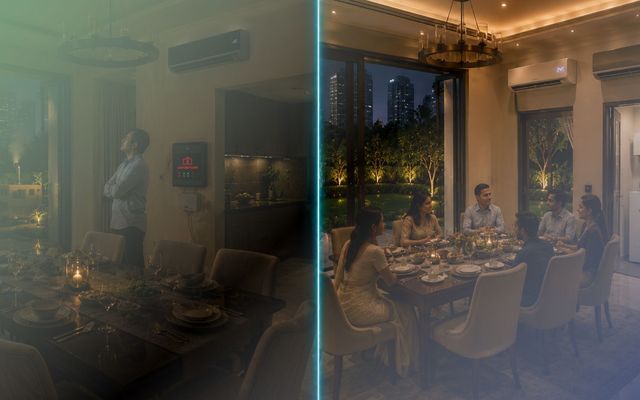
For a large independent home in Hyderabad, the 6 PM to 10 PM window is not a low-activity period. It is the most active four hours of the household day. Dinner is being prepared. Guests may be present. The home theatre is running. The HVAC is working at full capacity as the evening temperature remains high. Every unit consumed during this window now costs more than it did under the previous flat-rate structure.
For a home consuming 50 units during the evening peak window each day, the monthly surcharge adds ₹1,500 directly to the electricity bill. For larger homes with higher evening loads, that number scales considerably. It is a cost that arrives every month, on every bill, without requiring a grid failure to trigger it.
What a BESS does for both problems simultaneously
A Battery Energy Storage System addresses both the power cut problem and the ToD problem with the same installation.
For grid outages, the BESS switches over in under 20 milliseconds. No startup delay, no noise, no exhaust, no reboot. The home continues exactly as it was running, because from every device's perspective, nothing changed.
For the ToD surcharge, the BESS charges during off-peak hours at the rebated rate and discharges during the 6 PM to 10 PM peak window, replacing expensive peak-hour grid electricity with stored off-peak electricity. The household routine does not change. Dinner is still at the same time. The home theatre runs at the same time. The HVAC holds the same temperature. The energy source changes, not the lifestyle.
The two benefits compound each other in a way that makes the financial case for a Hyderabad home stronger than almost anywhere else in the country.
A quick look at the numbers
For a premium Hyderabad home currently spending ₹3 to ₹5 lakh annually on diesel and generator maintenance, a BESS eliminates most of that expenditure in the first year. The ToD optimisation benefit adds a further saving of ₹1.5 to ₹3 lakh annually, depending on the home's evening consumption profile. Paired with rooftop solar, the combined annual savings across diesel replacement, ToD optimisation, and daytime grid offset can reach ₹5 to ₹7 lakh for a large independent bungalow.
Battery storage systems installed alongside solar qualify under central government clean energy incentive frameworks, with applicable GST and depreciation benefits available depending on system configuration.
The decision a Jubilee Hills home is ready to make
Every other system in a premium Hyderabad home has been chosen to match the standard of the life being lived in it. The kitchen reflects it. The interiors reflect it. The car in the driveway reflects it.
The power infrastructure that runs all of it deserves the same quality of decision. A BESS is silent, clean, financially intelligent, and completely invisible in its operation. It is the kind of upgrade that, once in place, makes the diesel generator in the driveway feel like exactly the relic it always was.
Jubilee Hills runs on ambition. It should run on better and cleaner energy as well.
Give your home the upgrade it deserves with BESS! Reach out to TurnoVolt to learn more.