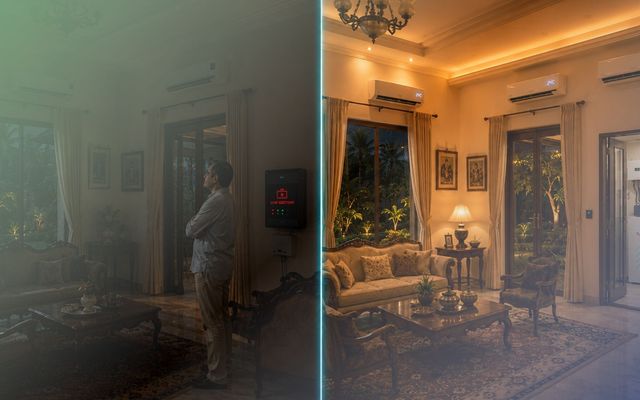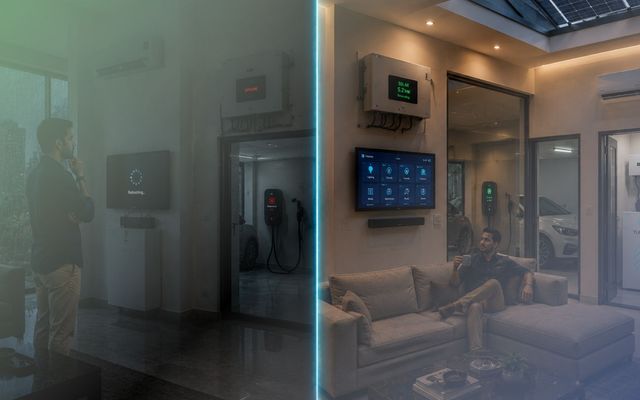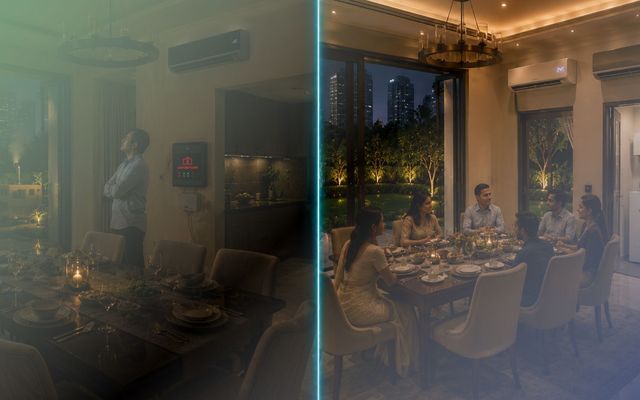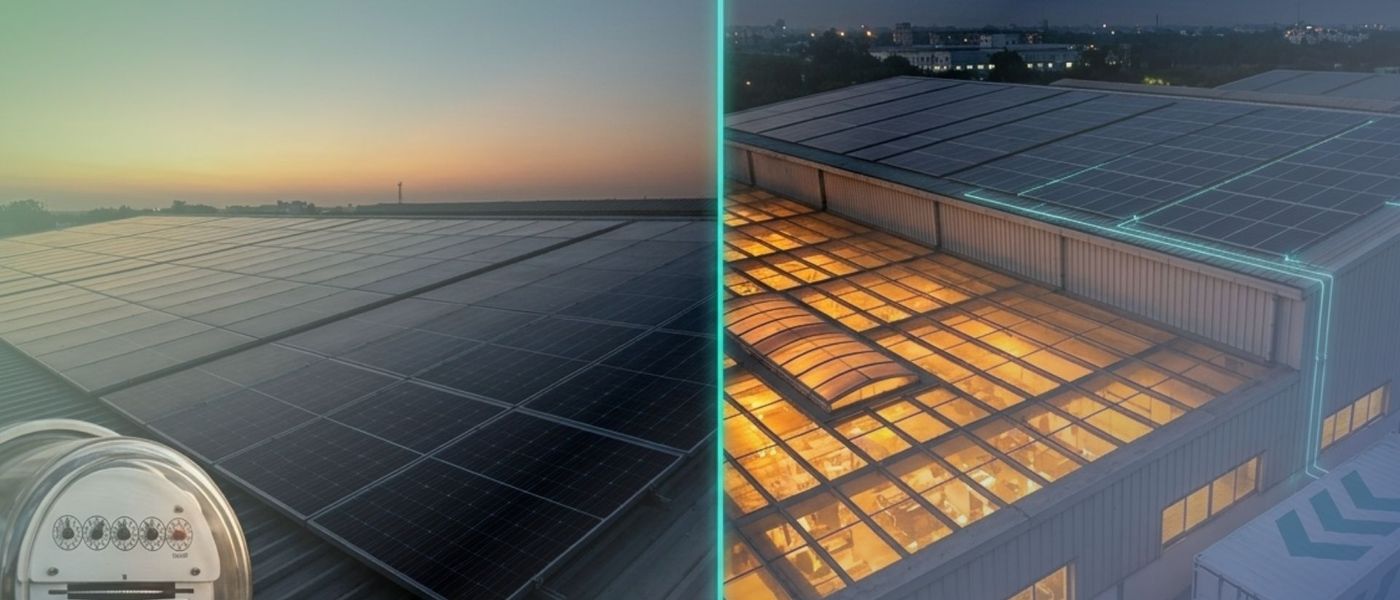
Gujarat leads India in rooftop solar installations. Ahmedabad's factories, warehouses, and industrial units have been among the earliest and most active adopters in the state. Facilities across Kathwada GIDC, Vatva GIDC, Sanand, and Odhav have put up large rooftop systems, attracted by Gujarat's strong solar irradiance of 5.5 to 6 kWh per square metre per day, a favourable state policy environment, and the straightforward economics of reducing a grid electricity bill. Many of these factories achieved energy independence during daylight hours. That was the goal, and it was achieved.
The problem is what happens after 5 PM.
Why solar alone is not enough for a factory running evening operations
A rooftop solar plant generates electricity from roughly 8 AM to 5 PM. For a factory running a single day shift, this overlap is adequate. For any facility running a second shift, extended hours, or evening operations, this gap is significant.
Gujarat's tariff structure, governed by the Gujarat Electricity Regulatory Commission (GERC), makes this gap financially costly. Under the current GERC tariff order effective April 1, 2026 (GERC tariff schedules), HT industrial consumers face time-of-use (ToU) surcharges during peak hours:
Time slot Hours ToU charge
Solar hours (rebate) 11 AM - 5 PM 60 paise per unit rebate
Standard hours All other times Base energy rate
Peak hours (surcharge) 7 AM to 11 AM and 6 PM to 10 PM ₹0.45 to ₹0.85 per unit surcharge*
*Surcharge of ₹0.45/unit applies to billing demand up to 500 kVA; ₹0.85/unit applies above 500 kVA.
In simple terms: the hours when solar generation is strongest carry a rebate. The hours immediately after solar generation ends carry a surcharge. A factory drawing heavily from the grid between 6 PM and 10 PM is paying the highest effective rate of the day, at precisely the point when the solar investment provides zero benefit.
What this means in financial terms for an Ahmedabad factory
Consider a factory with a 200 kWp rooftop solar system. During solar hours, the plant generates around 800 to 900 units per day in Ahmedabad's conditions. A portion of this is consumed directly. Any excess is exported to the grid under net metering at a rate well below what the factory pays to import.
In the evening, the factory draws from the grid. At a base HT energy rate of approximately ₹6 to ₹7 per unit plus the ₹0.45 to ₹0.85 per unit peak surcharge, the effective cost during evening peak hours runs to ₹6.45 to ₹7.85 per unit. For large industrial consumers above 500 kVA contracted demand, the evening peak cost is at the higher end of this range.
Meanwhile, the solar plant is contributing nothing to this evening consumption. The investment in panels is fully idle from 5 PM onwards, every day.
For a factory consuming 300 units during the evening peak window each day:
- Evening grid cost (peak hours): 300 units x ₹7.50/unit (approx.) = ₹2,250/day
- Monthly evening peak cost: approximately ₹67,500/month
- If served by stored solar at ₹3 to ₹4/unit effective cost: approximately ₹36,000 to ₹45,000 saving per month
The solar plant already exists. The generation already happens. BESS is what captures it and moves it to where it is worth more.
How BESS changes the value of an existing solar installation
A Battery Energy Storage System stores excess solar generation during the day and releases it during peak evening hours. The factory stops drawing from the grid at the most expensive time of day and draws from stored solar instead.
For an Ahmedabad factory, this changes three things simultaneously:
Evening peak grid draw falls. Units previously consumed at ₹7.50 and above per unit during peak hours are now served by solar stored earlier in the day at ₹3 to ₹4 per unit effective cost.
Solar ROI improves. A solar plant that was generating savings only during the 8 AM to 5 PM window now generates savings across the full working day, including the high-value evening peak hours.
Net metering export losses reduce. Excess midday solar that was being exported cheaply is now stored and used at a much higher value instead. The effective realisation per unit of solar generation rises significantly.
Gujarat's evolving tariff structure makes the case stronger
GERC has expanded the solar hours rebate window from four hours to six hours (11 AM to 5 PM) for FY 2026-27, and extended it to cover more consumer categories including HT consumers. This signals a clear policy direction: Gujarat is actively incentivising consumption during solar generation hours and penalising consumption during peak demand hours.
As this spread widens over successive tariff cycles, a factory with BESS captures increasing value from the same solar investment, without any modification to the solar plant itself.
The Renewable Purchase Obligation adds another dimension
GERC has set escalating Renewable Purchase Obligation (RPO) targets for industries as obligated entities, starting at 29.91 percent for FY 2024-25 and rising to 43.33 percent by FY 2029-30. Energy storage obligations of 1 percent in FY 2024-25 are also in place, expected to rise to 3.5 percent. For factories with compliance obligations, integrating BESS alongside existing solar is a practical and auditable path to meeting both RPO and ESO requirements.
Where to start
For Ahmedabad factory owners with existing rooftop solar, two questions from the last three months of electricity bills will tell you whether BESS is worth evaluating:
- How many units are being exported to the grid each month under net metering? Every exported unit represents solar generation that was sold cheaply instead of being used during peak hours.
- What is the monthly consumption during the 6 to 10 PM peak window? This is the direct saving opportunity. Each unit shifted from peak-hour grid supply to stored solar saves ₹3 to ₹4 per unit at minimum.
For most Ahmedabad factories with 100 kWp or larger solar installations and second-shift operations, the numbers make a clear case. The solar investment is already in place. BESS is what makes it work across the full day.
Maximize Solar Utilization at night with a BESS! Reach out to TurnoVolt to learn more.