For most businesses, a power cut is an inconvenience. For a hospital, it is a clinical event.
A ventilator that loses power mid-cycle, a surgical light that goes dark, an infusion pump that stops - these are not hypothetical scenarios. They happen every time the grid fails and the backup system does not respond fast enough. In a city like Chennai, where scheduled outages are a routine part of grid management - with dozens occurring each year, lasting anywhere from one to several hours, the question is not whether your hospital will face a power cut. It is whether your power architecture is built to handle it without any gap at all.
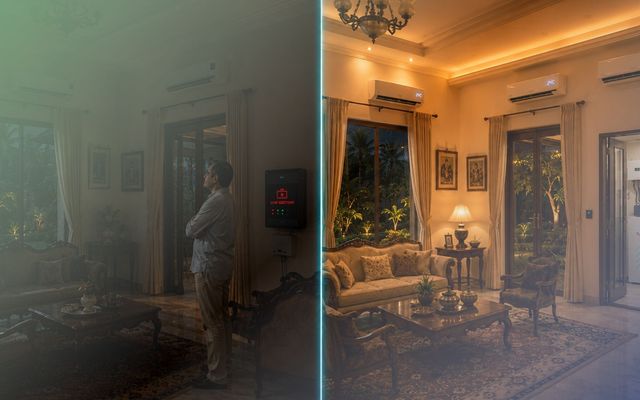
The standard setup in most Chennai hospitals is a diesel generator with an automatic transfer switch (ATS). On paper, this looks sufficient. In practice, there is a gap.
When grid power fails, the ATS detects the failure, signals the generator to start, waits for it to stabilise, and then transfers the load. This process typically takes 10 to 30 seconds. For most commercial buildings, that is acceptable. For a hospital, those seconds matter - ventilators, monitors, infusion pumps, and OT lighting all experience a momentary interruption.
Modern ICU ventilators carry internal battery backups that can bridge short gaps, but they are designed for patient transport, not for managing repeated grid failures across a shift. Every activation draws down that internal battery, and if the generator itself fails or runs dry, the margin disappears quickly.
The problem with how most hospitals handle power backup today
Beyond the clinical risk, there are other practical problems with DG-dependent backup:
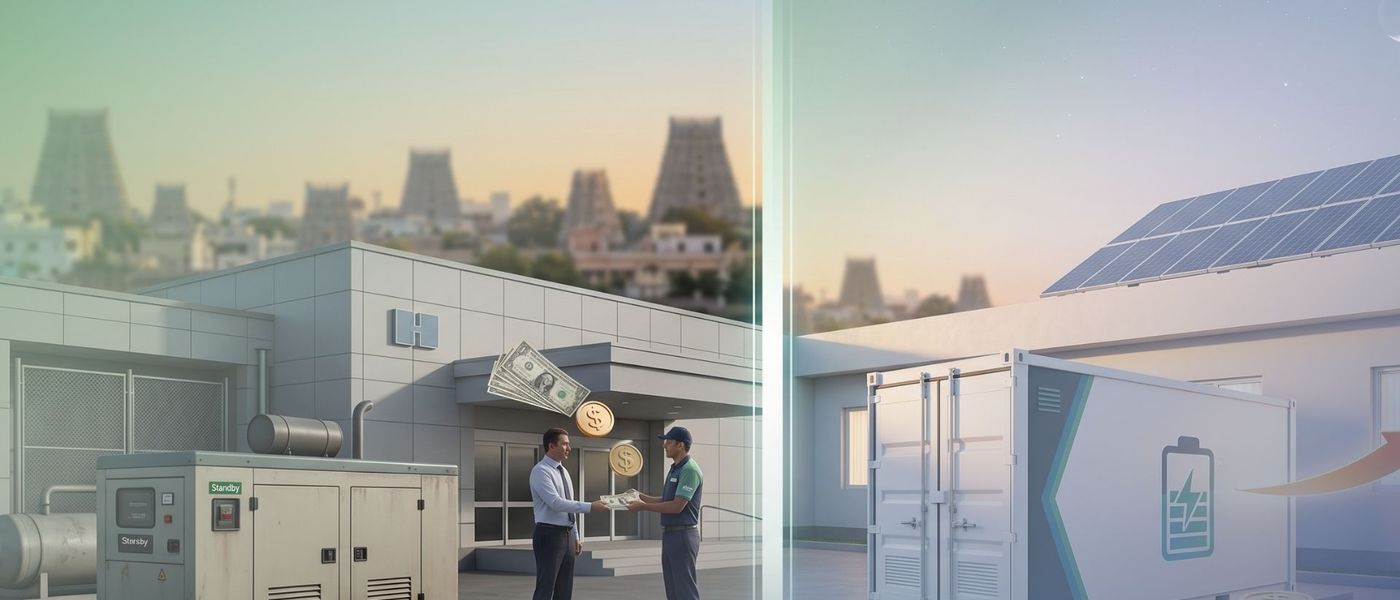
Diesel costs ₹22–25 per unit all-in, making it one of the most expensive sources of electricity in the energy mix
Generator maintenance is ongoing and failure-prone, particularly in units running high loads from HVAC, imaging equipment, and surgical systems
Fuel storage and replenishment add operational complexity, particularly during supply disruptions
CPCB emission norms and noise restrictions in residential-adjacent hospital zones create compliance pressure
What zero-gap power backup looks like
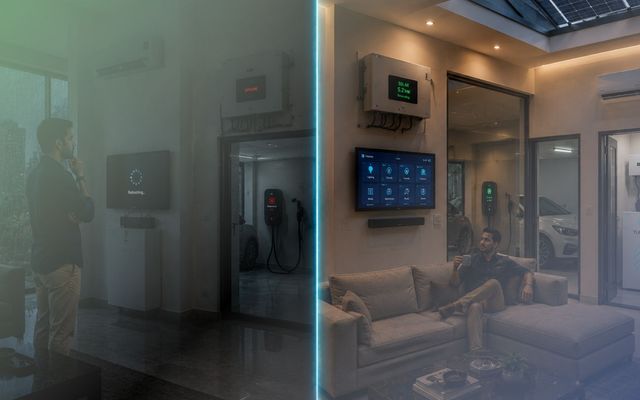
A Battery Energy Storage System eliminates the transfer gap entirely. Unlike a generator, a BESS is always online. When grid power fails, the switchover is instantaneous - measured in milliseconds, not seconds. There is no startup sequence, no fuel dependency, and no warm-up period.
For a hospital, this means:
- ICU and critical care loads continue without interruption
- OT suites do not experience even a momentary dip
- Monitoring and infusion equipment stays live throughout the grid failure
The switchover is invisible to clinical staff and patients
The BESS handles the bridge period while the generator, if one is present, starts up in the background. In many configurations, the two systems work together - BESS provides the instant response, and the generator takes over for extended outages once it has stabilised. This hybrid approach gives hospitals both zero-gap protection and extended runtime without relying on any single point of failure.
The cost picture
Running a hospital in Chennai means dealing with Tamil Nadu's industrial tariff structure - a base rate of ₹7.50 per unit for high-tension consumers, with peak-hour surcharges of 25% between 6–10 AM and 6–10 PM (TNERC tariff orders). For a hospital with round-the-clock loads, this adds up. A BESS that charges during cheaper hours and discharges during peak hours reduces both the grid bill and the frequency of DG use.
The cost comparison below shows what different power sources actually cost a hospital in Chennai across typical operating scenarios.
When modelled across a full year - accounting for reduced diesel runtime, avoided peak-hour grid charges, and lower maintenance cycles - a BESS system sized for a hospital's critical load typically delivers a payback period that makes financial sense, in addition to the clinical case.
What to assess first
For hospital administrators evaluating this, the starting point is understanding your current backup gap. A few practical questions:
- How long does your generator take to stabilise after a grid failure?
- How often does Chennai grid power fail in your area, and for how long?
- What percentage of your monthly electricity bill is coming from DG runtime versus grid?
- Are any of your critical systems - ventilators, OT equipment, imaging - experiencing micro-interruptions that go unlogged?
- The answers will tell you whether your current setup is genuinely adequate or whether it is simply untested at the wrong moment.
Ensure continuous power supply with a BESS! Reach out to Turno to learn more.